Major Festivals of Uttarakhand: Culture, Traditions & Seasonal Celebrations
Major Festivals of Uttarakhand
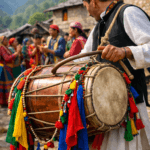
The festivals of Uttarakhand beautifully reflect the culture, traditions, spirituality, and agricultural lifestyle of the Himalayan region. These festivals are not only religious events but also symbolize nature worship, seasonal changes, community bonding, and gratitude toward deities and nature.
One of the most celebrated festivals is Phuldei (Phoolsangrad), which marks the arrival of spring. Along with it, festivals like Ghee Sankranti, Makar Sankranti, Harela, and Bikhoti are widely celebrated across different regions of the state.
Both Kumaon and Garhwal regions have their own unique traditions, yet they share a common cultural heritage that unites the people of Uttarakhand.
Below are the major festivals celebrated across Uttarakhand.
List of Major Festivals of Uttarakhand
- Deepawali (Bagwal)
- Holi
- Ghee Sankranti (Olgia)
- Makar Sankranti (Ghughutia)
- Panchami
- Phoolsangrad (Phuldei)
- Bikhoti
- Harela
- Samvatsar Pratipada
- Ganga Dussehra
- Dussehra
- Khatduwa
- Raksha Bandhan
- Stale
- Chantol
- Tear
- Wrist
- Sarah
- Bhiroli
- Wake Up
- Nunai
Deepawali (Bagwal Festival)
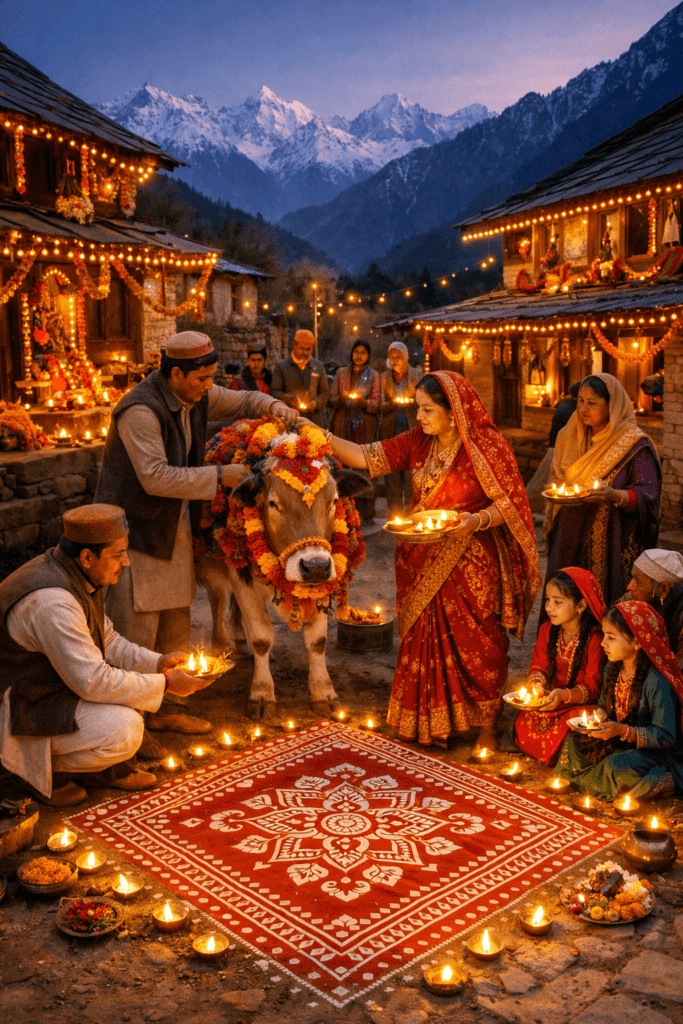
Diwali is celebrated with great joy and enthusiasm throughout Uttarakhand. In the local language, this festival is known as Bagwal or Bagwai.
On this occasion, people decorate their homes and courtyards, and traditional Aipan designs are drawn on floors and walls. Animals are also bathed and decorated.
A special ritual involves worshipping cows, where people perform aarti and offer sweets. In the evening, villagers celebrate by lighting torches made from pine bark, known as Bhela, creating a lively festive atmosphere.
Holi Festival in Uttarakhand
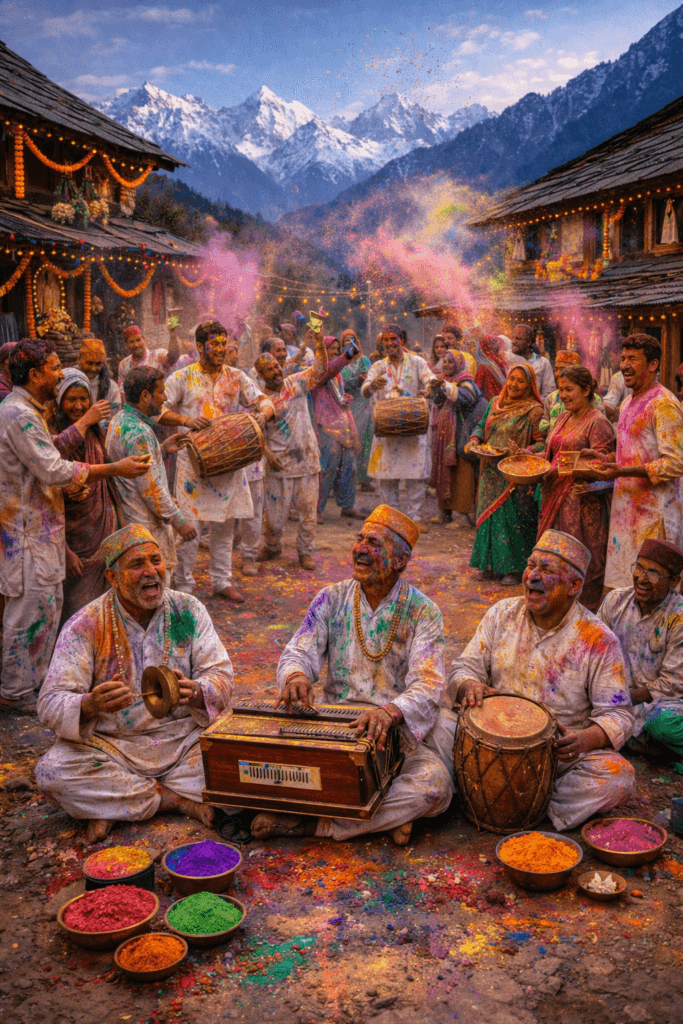
Holi is celebrated with great enthusiasm across Uttarakhand. The festival is famous for its musical traditions and folk singing.
Two unique forms of Holi are practiced:
Khadi Holi
Performed while standing and dancing, accompanied by traditional instruments.
Baithaki Holi
Celebrated in a sitting form with classical and devotional songs.
The celebrations begin on Ekadashi of the Falgun Shukla Paksha with Chirbandhan in temples, and the festivities continue until the full moon day (Holi).
Ghee Sankranti (Olgia Festival)
Ghee Sankranti, also known as Olgia, is celebrated in mid-September.
Historically, during the Chand dynasty, local people used to present gifts to the king on this day. The festival is known for preparing special traditional dishes.
Eating ghee (clarified butter) on this day is considered very auspicious, and it symbolizes health and prosperity.
Makar Sankranti (Ghughutia Festival)
Makar Sankranti is celebrated in January during the month of Magh.
In the Kumaon region, special sweets called Ghughut are prepared using flour. Children wear garlands made of these sweets and call crows with cheerful chants.
They feed the sweets to crows, which is why the festival is also known as “Kale Kaua Festival” in some areas.
In the Pali Pachhaun region of Ranikhet, elders bless the younger ones and distribute jaggery sweets.
Panchami Festival
The festival of Panchami is celebrated after Uttarayani (Sun’s northward movement).
On this day, barley leaves are worshipped and offered in temples. These sacred leaves are placed in the homes of family members.
Traditionally, the leaves are also sent to relatives living far away and even to the in-laws of married daughters.
Phoolsangrad (Phuldei Festival)
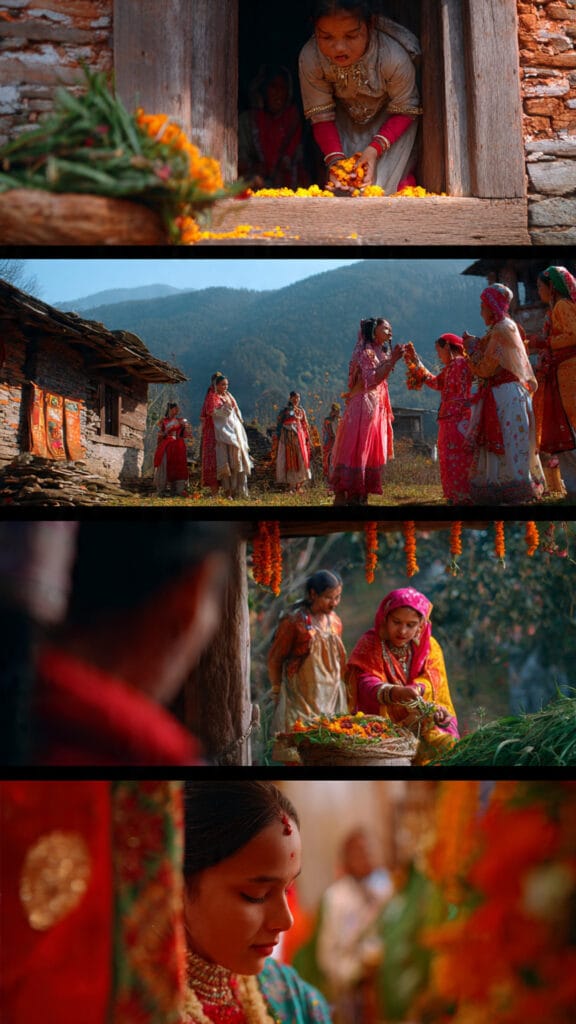
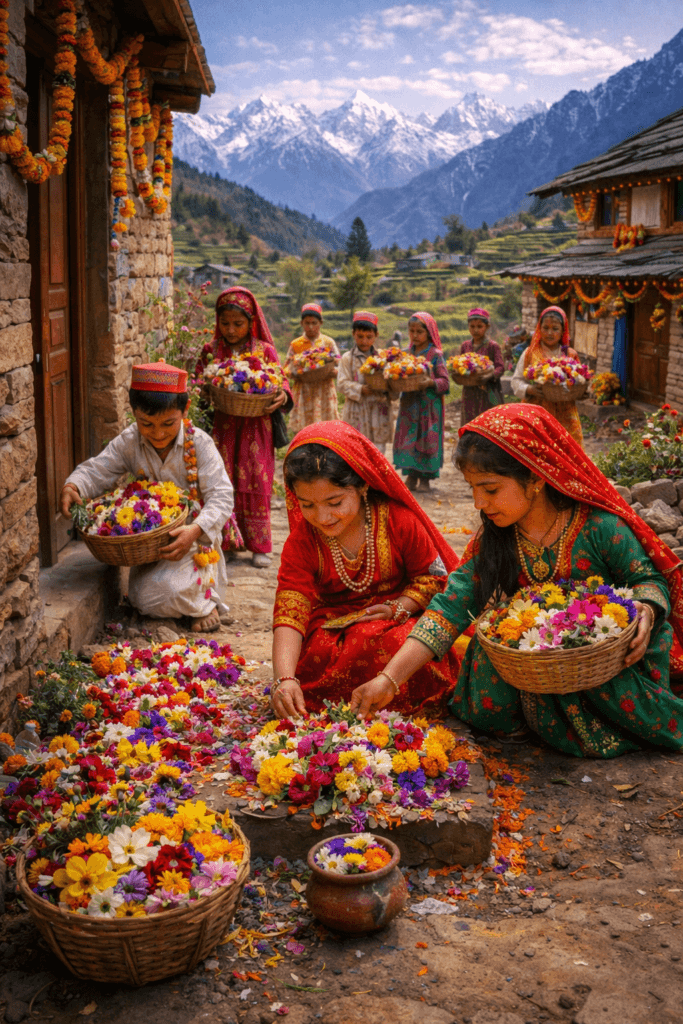
Phoolsangrad, also called Phuldei, celebrates the arrival of spring.
On the first day of the Chaitra month, children collect flowers in baskets and place them on the doorsteps of homes while wishing prosperity and happiness.
This festival continues for an entire month, and at the end children receive rice, jaggery, sweets and money as blessings.
Bikhoti Festival
Bikhoti is celebrated on the first day of the Baisakh month. On this day, many people observe fasting.
Pilgrims often begin their religious journeys and pilgrimages on this day.
Harela Festival
Harela is one of the most important festivals in the Kumaon region.
Ten days before the festival, people sow five, seven or nine types of grains in a pot filled with soil. Crops like paddy, maize, urad and peas are used.
On the tenth day, the green shoots are cut and offered to the idols of Shiva-Parvati, Ganesha and Kartikeya. The leaves are then placed on the heads of family members as blessings.
Samvatsar Pratipada
This festival is celebrated on the first day of Chaitra Shukla Paksha.
On this day:
- Harela is sown
- The Panchang (Hindu calendar) is recited
It marks the beginning of the Hindu New Year.
Ganga Dussehra
Ganga Dussehra is celebrated on Jyestha Dashami.
On this day, Brahmins distribute Dussehra letters to their hosts. These are placed on the doors of homes as blessings.
People also perform charity, food offerings, and rituals.
Dussehra Festival
Dussehra is celebrated after Navratri.
For ten days, traditional Ramlila performances are organized in villages and towns.
In many places, Harela is sown on Navratri’s first day and cut on Dussehra. It is offered to the deities and then placed on the heads of family members.
Khatduwa Festival
The Khatduwa festival is celebrated in the Kumaon region on Ashwin Sankranti (17 September).
This festival is dedicated to animals, especially cows.
People collect pine branches and dry grass, build a structure called Khatduwa, and burn it in the evening.
It is believed that burning Khatduwa removes evil influences affecting livestock.
In some regions, it is also called Gai Tyar (Festival of Cows).
Raksha Bandhan
Raksha Bandhan is celebrated on Shravan Purnima.
Brahmins offer Yajnopavit (sacred thread) and protection to their hosts. In return, hosts provide dakshina.
Sisters also tie rakhi threads on their brothers’ wrists as a symbol of protection and love.
Stale Festival
Baisi is a religious event lasting 22 days, held during Shravan and Paush months.
During this time, people live simple and sattvik lives while staying in village temples. Devotees sing praises of local folk deities.
Chantol Festival
Chantol is celebrated in several villages of Pithoragarh district.
This event is organized on the Ashtami of Chaitra month and is known as a religious procession.
The local deity Samhit Deval, believed to be a form of Shiva, is worshipped during this festival.
Chantol also marks the beginning of traditional singing and storytelling performances.
Tear Festival
During Bhadrapada month, the festival of Tear includes Chanchari celebrations.
On Saptami and Ashtami, people worship Gora-Maheshwar for eternal marital prosperity and good fortune.
Wrist Festival
This festival is celebrated in the Kumaon region to mark the harvest season.
Sarah Festival
Sarah is celebrated in the Garhwal region during Baisakh month.
On this day, people worship the messengers of Nanda Devi to protect the village from disease and misfortune.
Bhiroli Festival
Bhiroli is celebrated with great enthusiasm for the well-being and prosperity of children.
Wake Up Festival
This festival is associated with Mahasu Devta.
It is celebrated in the Bhadra month, marking the ceremonial bathing ritual of the deity.
Nunai Festival
Nunai is celebrated in the Jaunsar-Bawar region of Dehradun during the Shravan month.
The festival holds great cultural significance among local communities.
Q.1 Which is the most famous festival of Uttarakhand?
Phuldei, Harela, Makar Sankranti and Holi are among the most famous festivals celebrated in Uttarakhand.
Phuldei is a spring festival where children decorate doorsteps with flowers and wish prosperity to families.
Ghughutia is the local name for Makar Sankranti in Kumaon where children feed sweet garlands to crows.
Harela celebrates nature, agriculture and the arrival of the monsoon season.
Khatduwa festival is associated with the welfare of animals, especially cows.
- Uttarakhand Folk Music, Artists & Cinema
 Uttarakhand Folk Music, Artists & Cinema Uttarakhand Folk Music, Artists & Cinema represent a vibrant and living cultural tradition that has continued for centuries in the sacred land of Devbhoomi. In the villages and towns of Uttarakhand, music is not only heard but deeply felt during festivals, rituals, agricultural activities, and social gatherings. The main… Read more: Uttarakhand Folk Music, Artists & Cinema