The British Era and the Formation of Uttarakhand: History, Administration & Legacy
✨ Introduction
The British era played a crucial role in shaping the modern identity of Uttarakhand. After the defeat of the Gurkhas in the early 19th century, the British East India Company took control of this Himalayan region. Administrative reforms were introduced, infrastructure was developed, and forest laws were enforced, which significantly transformed the social and economic structure of Uttarakhand.
Understanding this period helps us trace how Uttarakhand evolved from a collection of hill regions into a structured administrative unit.
📜 Historical Background
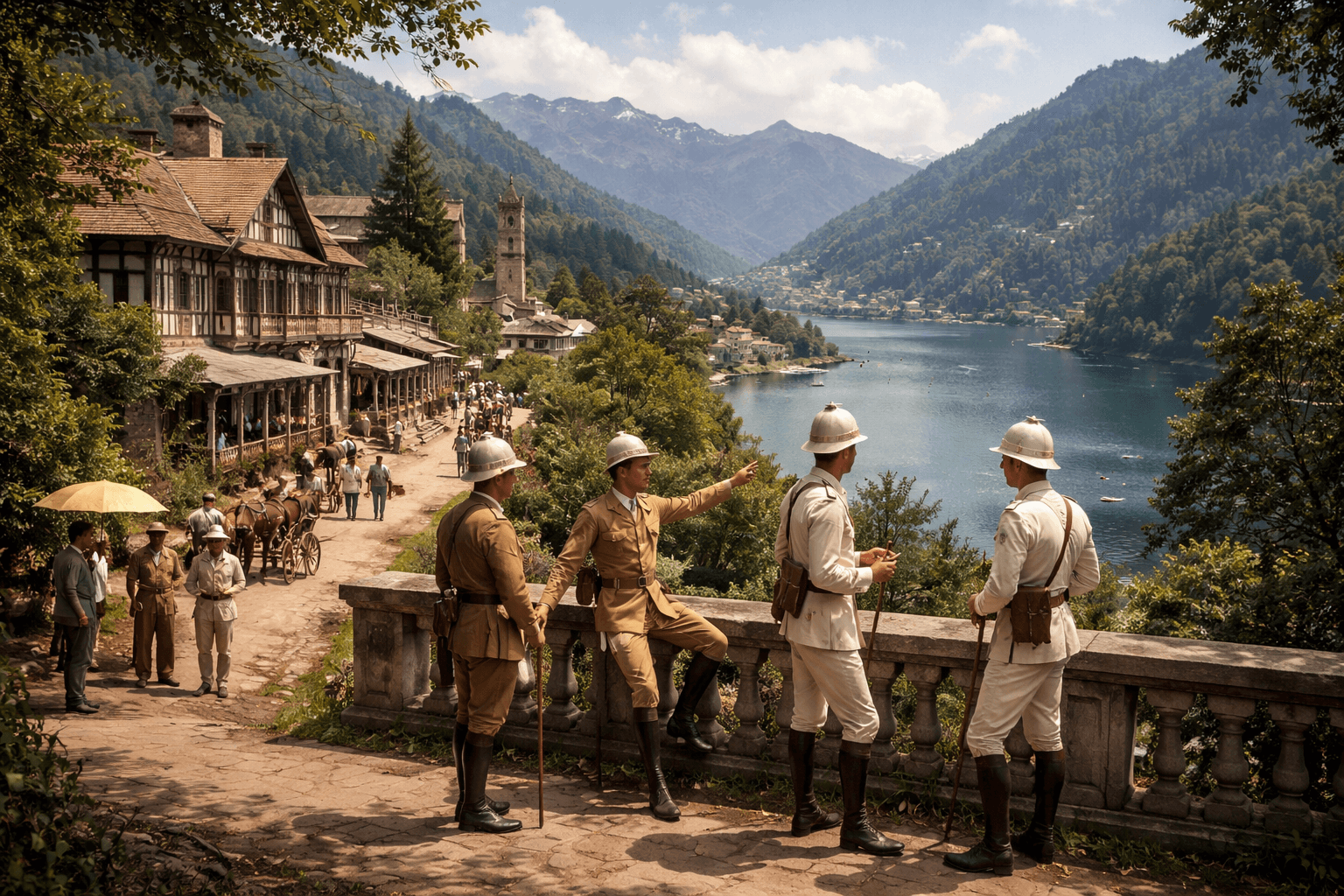
Before British rule, Uttarakhand was largely controlled by the Gurkhas of Nepal. However, conflicts between the Gurkhas and the British led to the Anglo-Gurkha War (1814–1816).
- The war ended with the Treaty of Sugauli (1816)
- The British gained control over Kumaon and Garhwal regions
- Tehri Garhwal remained under a local king but as a princely state
👉 This marked the beginning of British administration in Uttarakhand.
🏛️ British Administration in Uttarakhand
The British introduced a new administrative system to govern the region efficiently.
Key Features:
- Kumaon was made a non-regulation province
- Administered by a Commissioner (like G.W. Traill)
- Focus on maintaining law and order
- Minimal interference in local customs
This system was unique because it allowed flexibility compared to other British provinces.
🌲 Forest Policies and Their Impact
One of the most significant changes during British rule was the introduction of strict forest laws.
Key Developments:
- Forests were declared government property
- Local communities lost traditional rights
- Introduction of the Indian Forest Act (1865 & 1878)
👉 This led to resentment among villagers and later inspired movements like forest protests.
🚧 Development of Infrastructure
The British developed infrastructure mainly for administrative and strategic purposes.
Major Contributions:
- Roads connecting hill regions
- Establishment of hill stations like Nainital
- Tea plantations in Kumaon
- Educational institutions and churches
These developments improved connectivity but primarily served colonial interests.
⚖️ Social and Economic Changes
The British era brought both positive and negative changes:
Positive:
- Introduction of modern education
- Improved communication
- Administrative stability
Negative:
- Exploitation of forest resources
- Economic burden on locals
- Migration due to lack of employment
👉 These changes deeply influenced Uttarakhand’s society.
🔥 Resistance and Public Movements
The policies of the British led to dissatisfaction among the people.
Key Movements:
- Forest protests
- Coolie Begar movement (against forced labor)
- Early participation in India’s freedom struggle
These movements laid the foundation for political awareness in the region.
🏞️ Formation of Uttarakhand Identity
Although Uttarakhand became a separate state much later in 2000, the British era laid the groundwork for its identity.
Key Factors:
- Administrative unity of Kumaon and Garhwal
- Shared economic challenges
- Cultural and geographical similarities
👉 This period helped shape the demand for a separate state in later years.
📌 Conclusion
The British era was a turning point in the history of Uttarakhand. While it introduced administrative systems, infrastructure, and education, it also caused economic exploitation and social challenges. The legacy of this period can still be seen in the region’s governance, forest policies, and socio-economic structure.
Understanding this history not only helps in academic learning but also connects us to the roots of Uttarakhand’s identity.
Q1. When did British rule start in Uttarakhand?
British rule began after the Anglo-Gurkha War in 1816 with the Treaty of Sugauli.
They restricted local access to forests, causing economic hardship and protests.
They introduced a non-regulation system, especially in Kumaon, allowing flexible governance.
Roads, hill stations, education systems, and tea plantations were developed.
It created administrative unity and socio-economic conditions that later led to the demand for a separate state.
- Rudraprayag Uttarakhand
 SummaryThis article provides a complete overview of Rudraprayag, a spiritually important district in Uttarakhand. It explains the significance of the sacred confluence of the Alaknanda River and Mandakini River, which is one of the Panch Prayag. The article also highlights major religious sites like Kedarnath Temple, Tungnath Temple, and Madmaheshwar Temple, along with their mythological… Read more: Rudraprayag Uttarakhand
 - 🌊 Sharda River Origin Glacier & Kali River System🌊 Sharda River Origin Glacier & Kali River System – Complete Guide (Uttarakhand Eastern Rivers) 📝 Introduction The Sharda River, also known as the Kali River, is one of the most important rivers in the eastern river system of Uttarakhand. Originating from the remote Himalayan glaciers, this river plays a crucial role in shaping the… Read more: 🌊 Sharda River Origin Glacier & Kali River System
- Chamoli Gopeshwar – Part 2Chamoli Gopeshwar – Part 2: Divya Sthal, Hidden Gems aur Himalayan Adventures ka Sampoorna Margdarshan 🔰 Introduction Chamoli aur Gopeshwar ki adbhut kahani ko samajhne ke liye Part 1 bahut mahatvapurn hai, jahan humne is pavitra bhoomi ke itihaas, dharmik mahatva aur sanskritik virasat ko detail me samjha. Agar aapne abhi tak use nahi padha… Read more: Chamoli Gopeshwar – Part 2
- 🌄 Bilwa aur Neel Parvat ki Prachin Pauranik Katha🌄 Bilwa aur Neel Parvat ki Prachin Pauranik Katha – Haridwar ka Adhyatmik Rahasya ✨ Introduction (Pauranik Drishtikon se) Haridwar ko prachin granthon mein “Moksh ka Dwaar” kaha gaya hai. Yeh pavitra nagri Shivalik Range ke beech sthit hai, jahan Bilwa aur Neel Parvat do divya shaktiyon ke roop mein virajmaan hain. Pauranik kathao ke… Read more: 🌄 Bilwa aur Neel Parvat ki Prachin Pauranik Katha
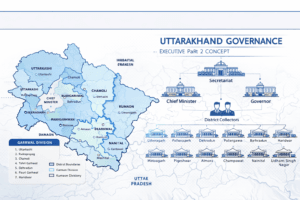
- Uttarakhand Governance (Executive) – Part 2Uttarakhand Governance (Executive) – Part 2 Directorate, Divisions, Administrative History, District System, Advocate General Full Details Introduction The Uttarakhand Governance Executive system (Part-2) explains the remaining administrative structure of the state, which is essential to understand how policies are implemented at different levels. In Part-1, we studied the Governor, Council of Ministers, Chief Minister and… Read more: Uttarakhand Governance (Executive) – Part 2