Uttarakhand: Political-Administrative Structure
Uttarakhand, a Himalayan state of India, is known not only for its natural beauty but also for its distinct political and administrative identity. The state plays a vital role in preserving Himalayan ecology, culture, and governance traditions. Its political-administrative structure reflects both constitutional values and regional uniqueness.
Uttarakhand was formed on 9 November 2000 by carving out 13 Himalayan districts from Uttar Pradesh. With this formation, it became the 27th state of the Indian Republic and the 11th Himalayan state. Later, on 1 January 2007, the state’s name was officially changed from Uttaranchal to Uttarakhand, a name deeply rooted in ancient Indian literature and tradition.
State Emblem of Uttarakhand

The state emblem of Uttarakhand, approved in 2001, beautifully represents the state’s geographical and spiritual identity. The emblem depicts three Himalayan mountain peaks arranged in a circular form, symbolizing stability, strength, and natural grandeur.
Below the peaks, four flowing waves of the River Ganga are shown, highlighting the sacred rivers originating from this Himalayan region. The central peak is taller than the other two, and at its center is Ashoka’s Lion Pillar, representing Indian sovereignty and constitutional authority.
Beneath the pillar, the national motto “Satyameva Jayate” is inscribed, a phrase taken from the Mundaka Upanishad, meaning Truth Alone Triumphs. This emblem reflects governance rooted in truth, nature, and cultural heritage.
State Flower: Brahma Kamal
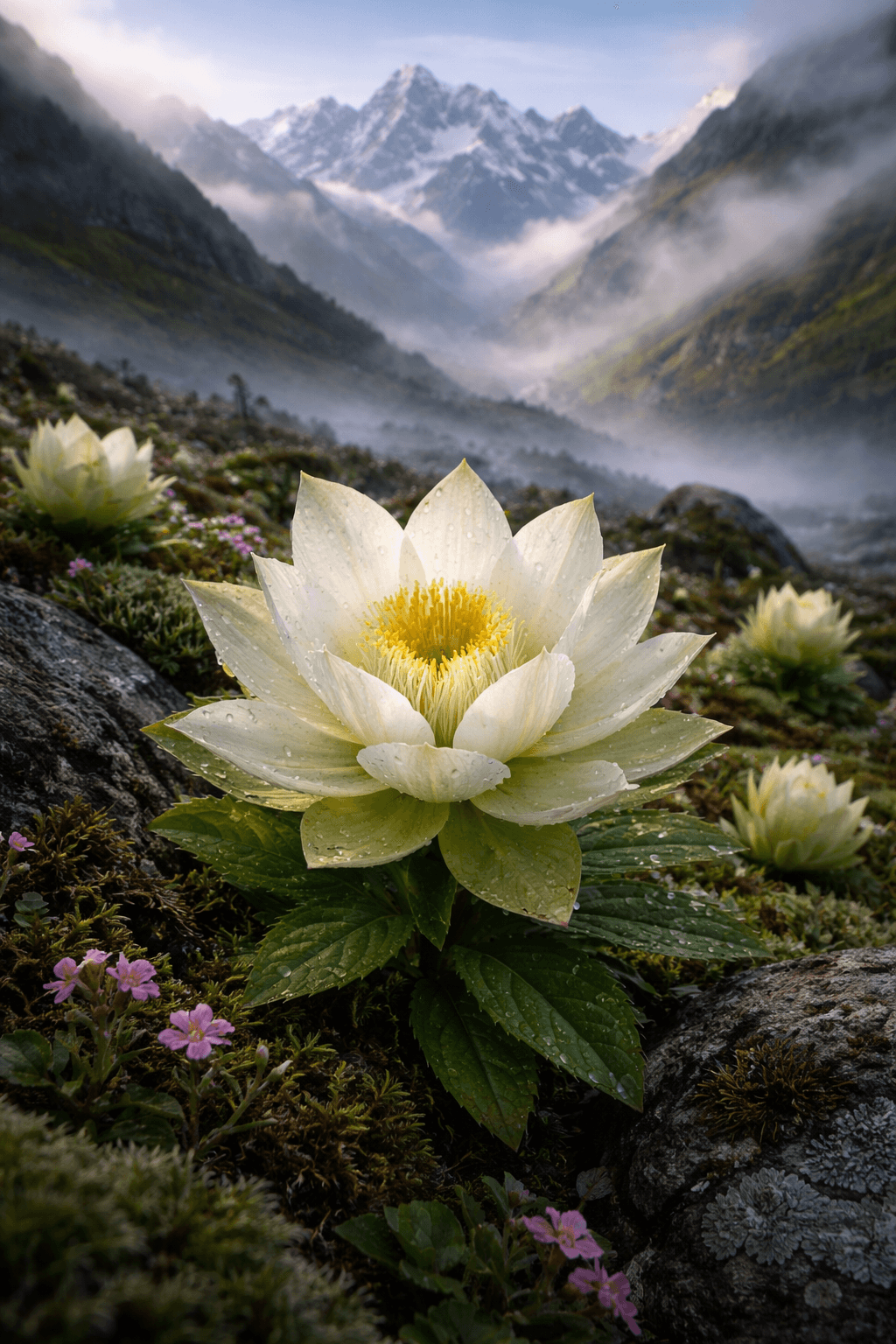
The Brahma Kamal has been declared the state flower of Uttarakhand. It grows at extreme altitudes ranging from 4,800 to 6,000 meters in the Central Himalayan region. Botanically, it belongs to the Asteraceae family, and its scientific name is Saussurea obvallata.
Uttarakhand is home to 24 species of Saussurea, while around 210 species exist worldwide. Notable species found in the state include Saussurea graminifolia (Phenkamal), Saussurea lappa, Saussurea simpsoniana, and Saussurea grassifera (Kastura Kamal).
This sacred flower is commonly found in the Valley of Flowers, Kedarnath region, Shivling base, and Pindari Glacier. Locally, it is known as “Kaul Padma.”
Brahma Kamal is also mentioned in the Vedas and the Mahabharata (Vana Parva), where it is described as a fragrant divine flower. According to mythology, it is offered to Lord Shiva at Kedarnath and later distributed as a sacred blessing.
The plant grows 70–80 cm tall and blooms only for three months (July to September). Its purple flowers bloom in clusters on lotus-like leaves, filling the surrounding atmosphere with a divine fragrance.
State Bird: Himalayan Monal
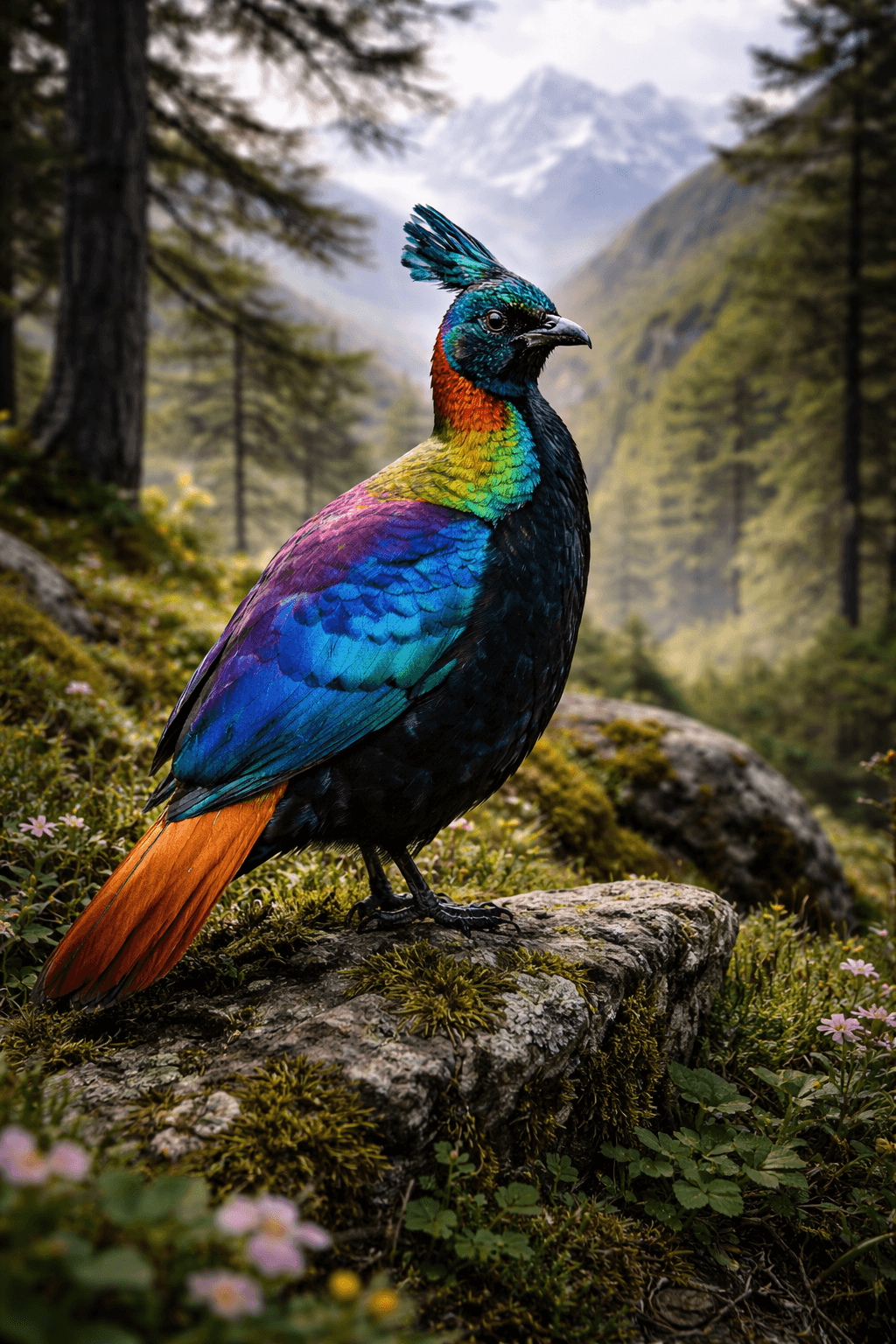
The Himalayan Monal, also known as the Himalayan Peacock, has been declared the state bird of Uttarakhand. This colorful bird inhabits dense forests between 2,500 and 5,000 meters across the Himalayan region.
Its scientific name is Lophophorus impejanus. The Monal is locally known as Manyal or Munal in Uttarakhand, Kashmir, Assam, and Nepal. Interestingly, it is also the state bird of Himachal Pradesh and the national bird of Nepal.
The male Monal is known for its brilliant blue, green, and black plumage, along with a colorful crest on its head. The female, locally called Daffia, is less colorful. Unlike many birds, the Monal does not build nests and lays eggs in rock crevices or tree holes.
Its diet includes plants, insects, and potatoes, and it often causes damage to potato crops. Due to excessive hunting for meat and feathers, its population has declined significantly.
State Animal: Musk Deer
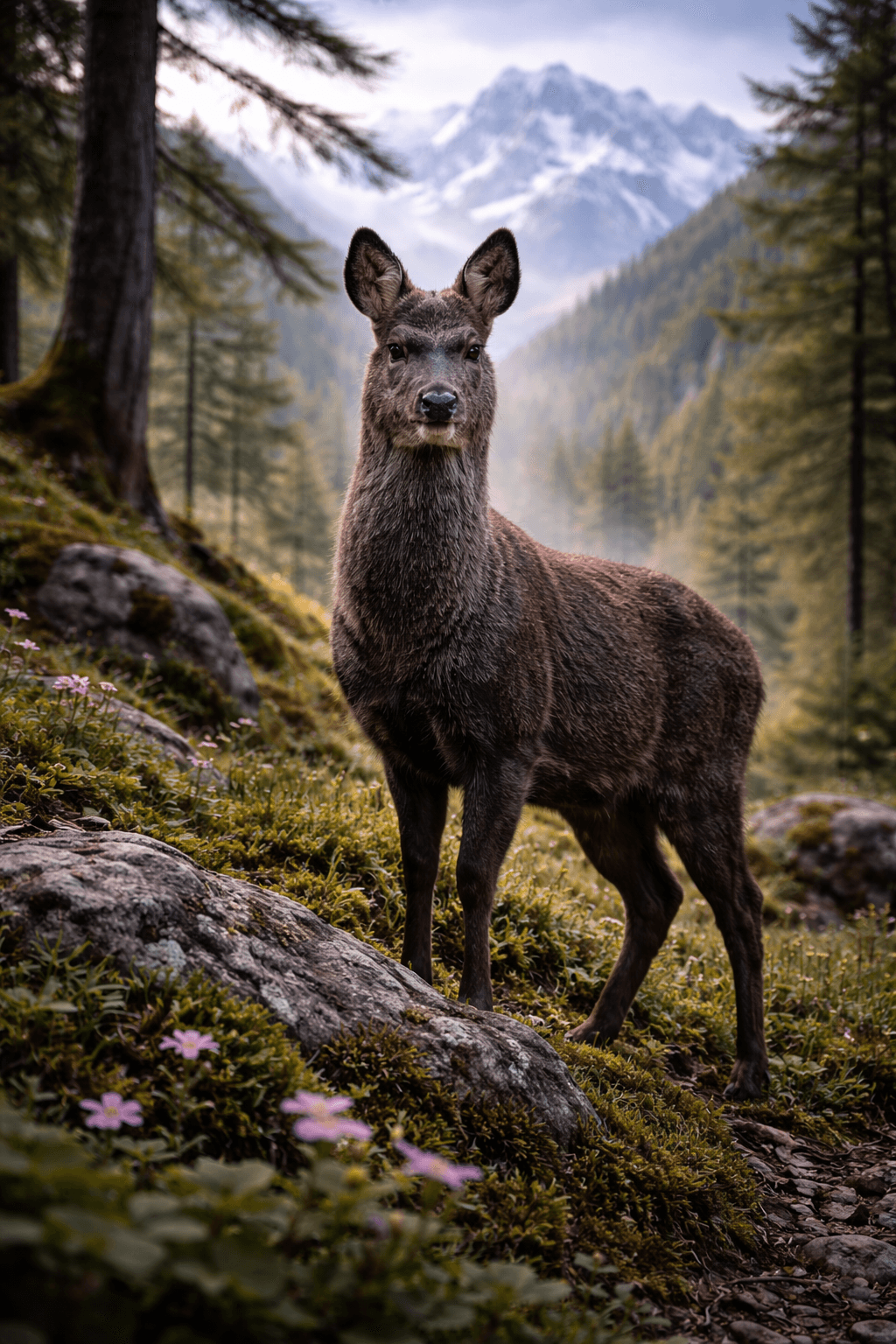
The Musk Deer, scientifically known as Moschus chrysogaster, has been declared the state animal of Uttarakhand. It inhabits forested areas at altitudes of 2,000 to 5,000 meters, especially in Kedarnath, Valley of Flowers, Uttarkashi, and Pithoragarh districts.
This deer is brown with black and yellow spots, stands about 20 inches tall, and weighs 10–20 kg. Instead of horns, male deer possess two long protruding canine teeth for defense. They have an excellent sense of smell and hearing, and their average lifespan is around 20 years.
Only male musk deer produce musk, which is secreted from a gland near the navel. A single deer produces 30–45 grams of musk every three years. Musk is used in perfumes and medicines for asthma, heart disease, pneumonia, epilepsy, and typhoid.
Due to its high market value, illegal poaching has severely reduced its population. Conservation efforts include:
- Musk Deer Sanctuary (1972) – Kedarnath Wildlife Division
- Mahrudi Research Centre (1977)
- Askot Sanctuary (1986)
- Breeding Centre, Kanchula Khark (1982)
State Tree: Buras (Rhododendron)
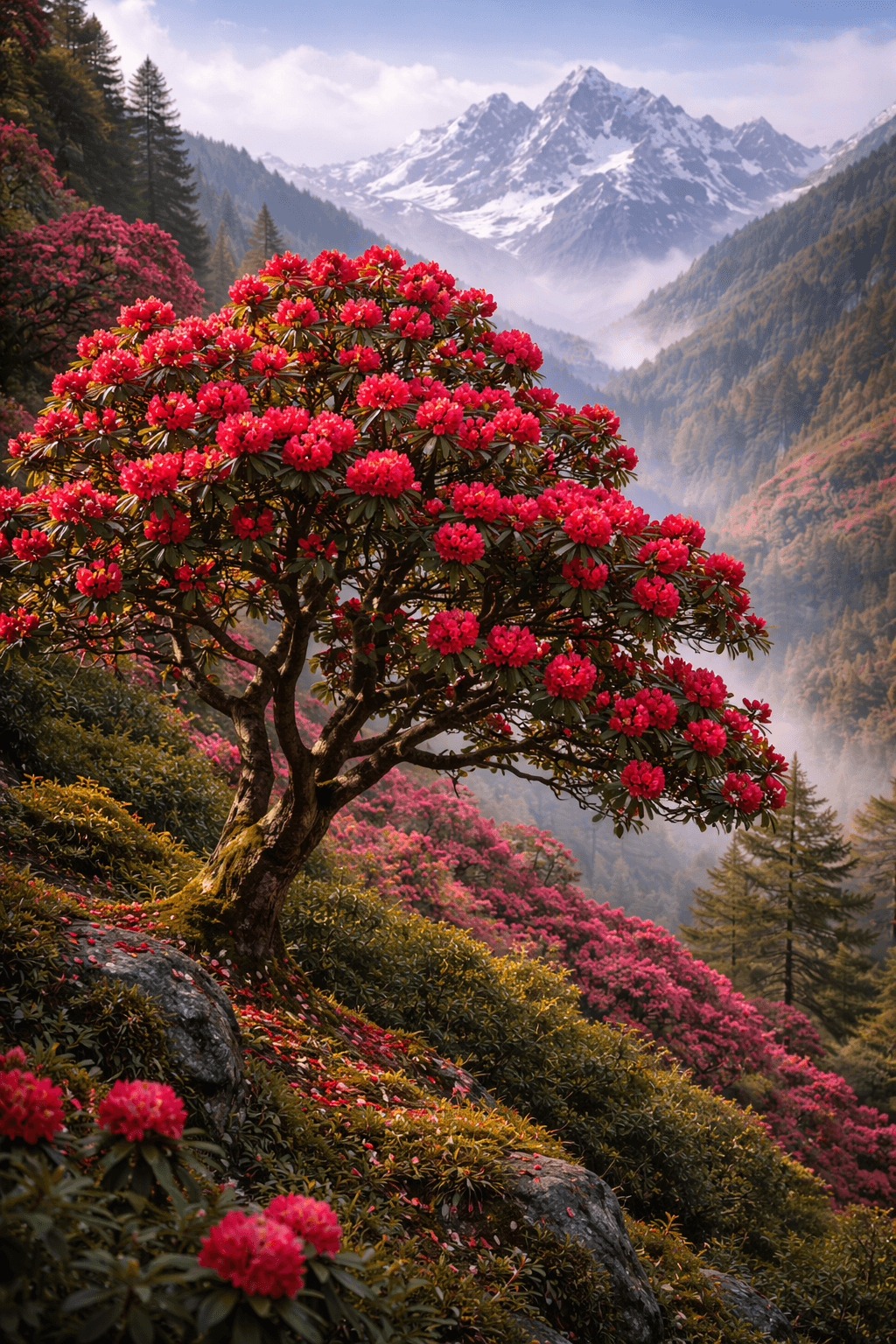
The evergreen Buras tree, botanically known as Rhododendron arboreum, is the state tree of Uttarakhand. It grows at altitudes between 1,500 and 4,000 meters and cannot survive in plains.
The tree is famous for its bright red flowers, which gradually change color with altitude—turning white above 11,000 feet. Flowering begins after Makar Sankranti and peaks by Baisakhi.
Buras flower juice is rich in medicinal properties and is especially beneficial for heart health. Natural dyes are also produced from its flowers. Due to illegal felling, it was declared a protected tree under the Forest Act of 1974.
Related Posts:
Major Organizations of Uttarakhand: Foundations of Political and Social Awakening