
Metahistoric Period of Uttarakhand
The Metahistoric Period, also known as the Half-Historic or Mythological Period, occupies a crucial place in the ancient history of Uttarakhand. This period bridges the gap between prehistoric times and recorded history. Due to limited archaeological evidence, most knowledge of this era is derived from religious, literary, and mythological texts, which is why it is also called the Puranic Period.
Historians generally place the extension of this period from around the 4th century BCE up to the beginning of the historical era. During this time, early societies of Uttarakhand developed agriculture, animal husbandry, metallurgy (iron and copper), and rural–urban settlements.
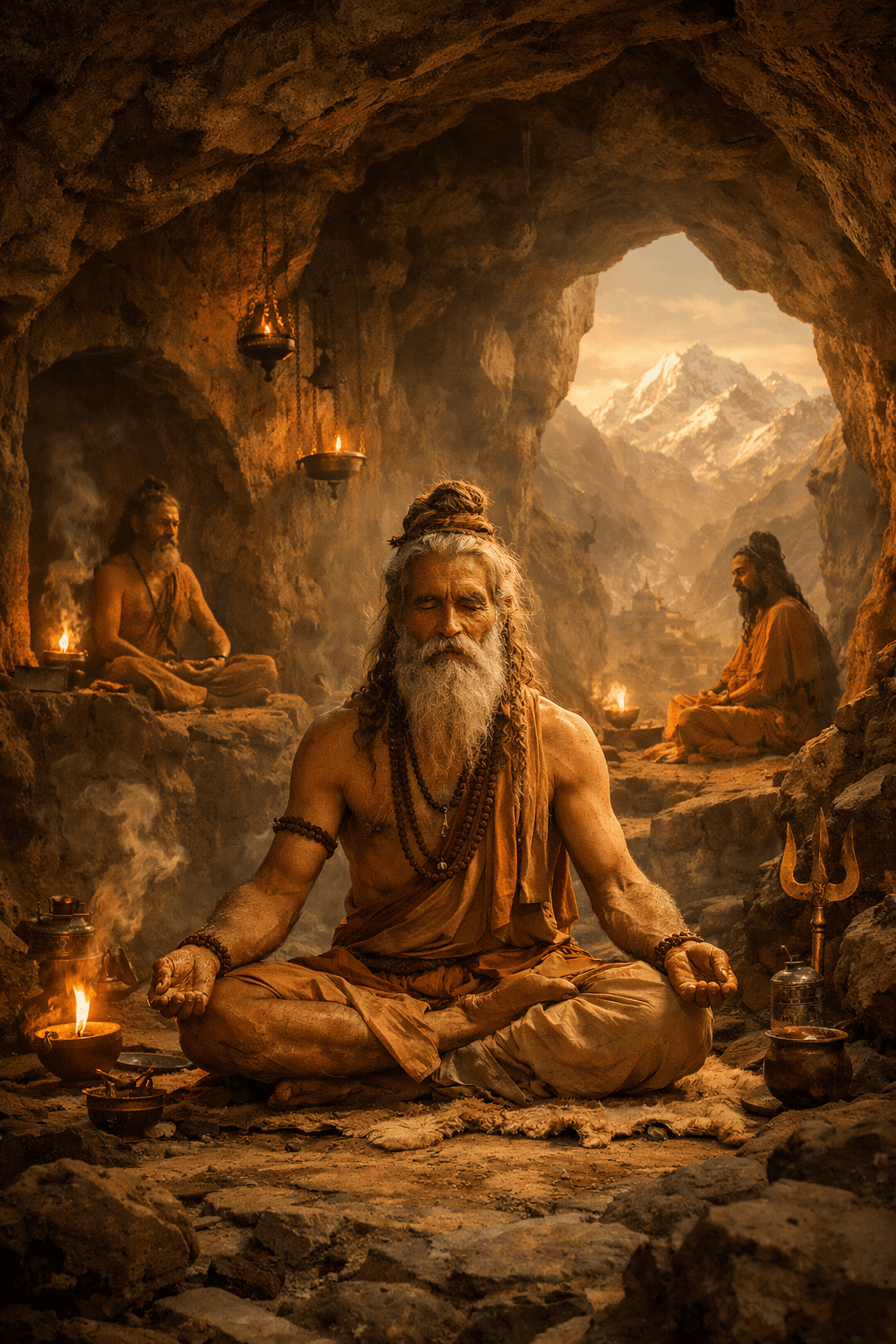
Sources of the Metahistoric Period
Because direct archaeological remains are limited, the main sources of this period include:
- Vedas and Brahmanical texts
- Upanishads and Puranas
- Ramayana and Mahabharata
- Buddhist Pali literature
Important archaeological indicators such as copper hoards from Bahadrabad, megalithic burial remains from Malari, and findings from the Ramganga Valley support the gradual transition toward organized civilization.
Early Literary References to Uttarakhand
The Rigveda provides the earliest reference to Uttarakhand, describing it as a divine land filled with sages and ascetics. In later texts, the region is glorified as:
- Punya Bhoomi (Sacred Land)
- Rishi Bhoomi (Land of Sages)
- Holy Kshetra
The Aitareya Brahmana refers to this region as Uttara-Kuru, indicating the presence of the legendary Uttara-Kuru people.
According to the Skanda Purana, the Himalayan region was divided into five parts:
- Nepal
- Manaskhand
- Kedarkhand
- Jalandhar
- Kashmir
Among these, Manaskhand and Kedarkhand form the core of present-day Uttarakhand.
Kedarkhand and Manaskhand
- Kedarkhand: The area from Mayakshetra (Haridwar) to the Himalayas, representing modern Garhwal
- Manaskhand: The region from Nanda Devi to Kalagiri, corresponding to present Kumaon
The Nanda Devi peak marks the traditional boundary between these two regions. Ancient texts also refer to the combined region as Uttarakhand, Barhapur, and Khasdesh.
In Buddhist Pali texts, the entire region is described as Himwant.
Garhwal Region in the Metahistoric Period
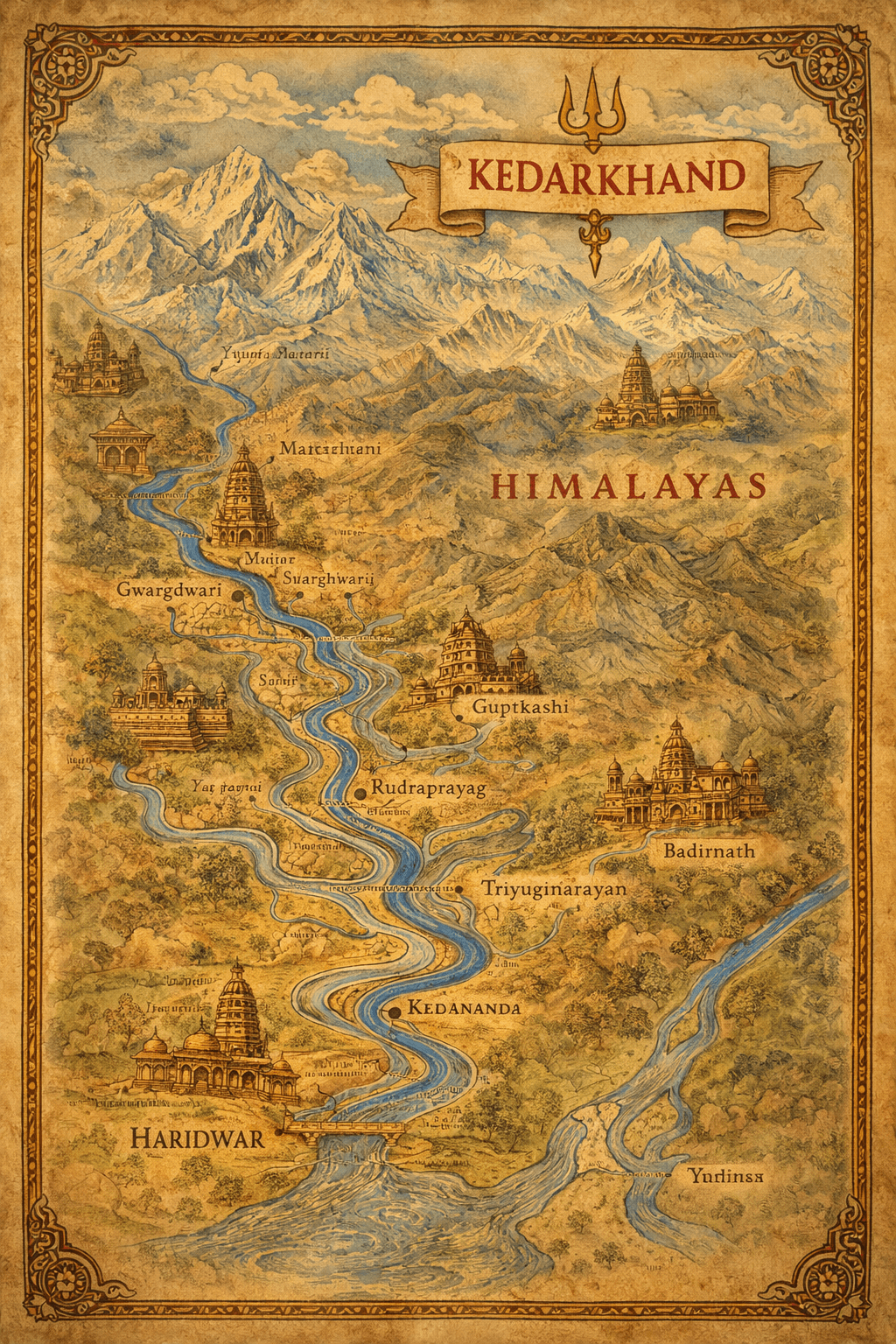
Ancient Names of Garhwal
In early texts, Garhwal was known as:
- Badrikashram Kshetra
- Tapobhoomi
- Sarvabhoomi
- Kedarkhand
The modern name Garhwal came into use around 1515 CE, after King Ajaypal Pawar unified the region by organizing 52 hill forts (Garhs).
Vedic and Mythological Traditions
The Rigveda mentions that Devraj Indra destroyed the 100 forts of Asura King Shambar in this region. After a great destruction, the Saptarishis are believed to have taken refuge in Prana village, from where human creation resumed.
Alkapuri, the mythical capital of Kubera, is believed to be the abode of Manu, the first human ancestor.
Garhwal is also described as the land of the Manasputras of Brahma, including:
- Daksha
- Marichi
- Pulastya
- Pulaha
- Atri
Scholarly Interpretations
Historians like Hariram Dhasmana, Bhajan Singh, and Dr. Shivnand Nautiyal believe that the Saptasindhu region mentioned in the Rigveda refers to Garhwal.
The Vedic hymns are believed to have been composed in caves near Badrinath, such as:
- Ganesh Gufa
- Vyasa Gufa
- Narada Gufa
- Skanda Gufa
Ramayana and Mahabharata Connections
- Vashishtha Ashram in Tehri Garhwal is associated with Sage Vashishtha and Arundhati.
- Sitonsun (Devprayag) is believed to be the place where Sita merged into the earth, commemorated by the Mansar Mela.
- Tapovan (Tehri Garhwal) is associated with the penance of Lakshmana.
- The kingdom of Banasura, with capital Jyotishpur (Joshimath), existed here during the Ramayana.
In the Mahabharata, the Van Parva describes the journey from Haridwar to Kedarnath, including Badrinath. The region was ruled by Pulindas (Kunindas) and Kiratas, with King Subahu of Srinagar supporting the Pandavas.
Ancient Centers of Learning
Two major Vidyapeeths existed:
- Badrikashram
- Karnashram
Karnashram, located on the Malini River (present Chaukaghat), is associated with Shakuntala and King Dushyanta. Emperor Bharat was born here, after whom India (Bharat) is named.
Kalidasa composed Abhigyan Shakuntalam at this sacred site.
Kumaon Region in the Metahistoric Period

According to mythology, Lord Vishnu’s Kurma Avatar occurred at Kanteshwar Mountain near Champawat. This led to the name Kurmanchal, which later evolved into Kumaon.
Initially, only Champawat was called Kumaon, but later it expanded to include:
- Almora
- Pithoragarh
- Bageshwar
- Udham Singh Nagar
References in Puranas and Epics
The Manaskhand of Skanda Purana contains the most detailed references to Kumaon.
Texts such as the Brahma Purana, Vayu Purana, and Mahabharata mention the presence of:
- Kiratas
- Kinnaras
- Yakshas
- Nagas
- Gandharvas
The Jakhandevi Temple (Almora) confirms the ancient presence of Yakshas.
Naga Tradition in Kumaon
Numerous Naga temples indicate the dominance of serpent-worshipping groups:
- Binag (Beninag) – Pithoragarh
- Dhaulnag
- Kalinag
- Pingalnag
- Basukinag
The Binag Temple is the most prominent among them.
Ethnic and Cultural Legacy
Descendants of Kiratas, speaking Munda languages, still inhabit Askot and Dodihat regions.
Before the arrival of Rajputs, Khas groups dominated Kumaon and played a significant role in the spread of Buddhism.
Transition to the Historical Period: Inscriptions and Evidence
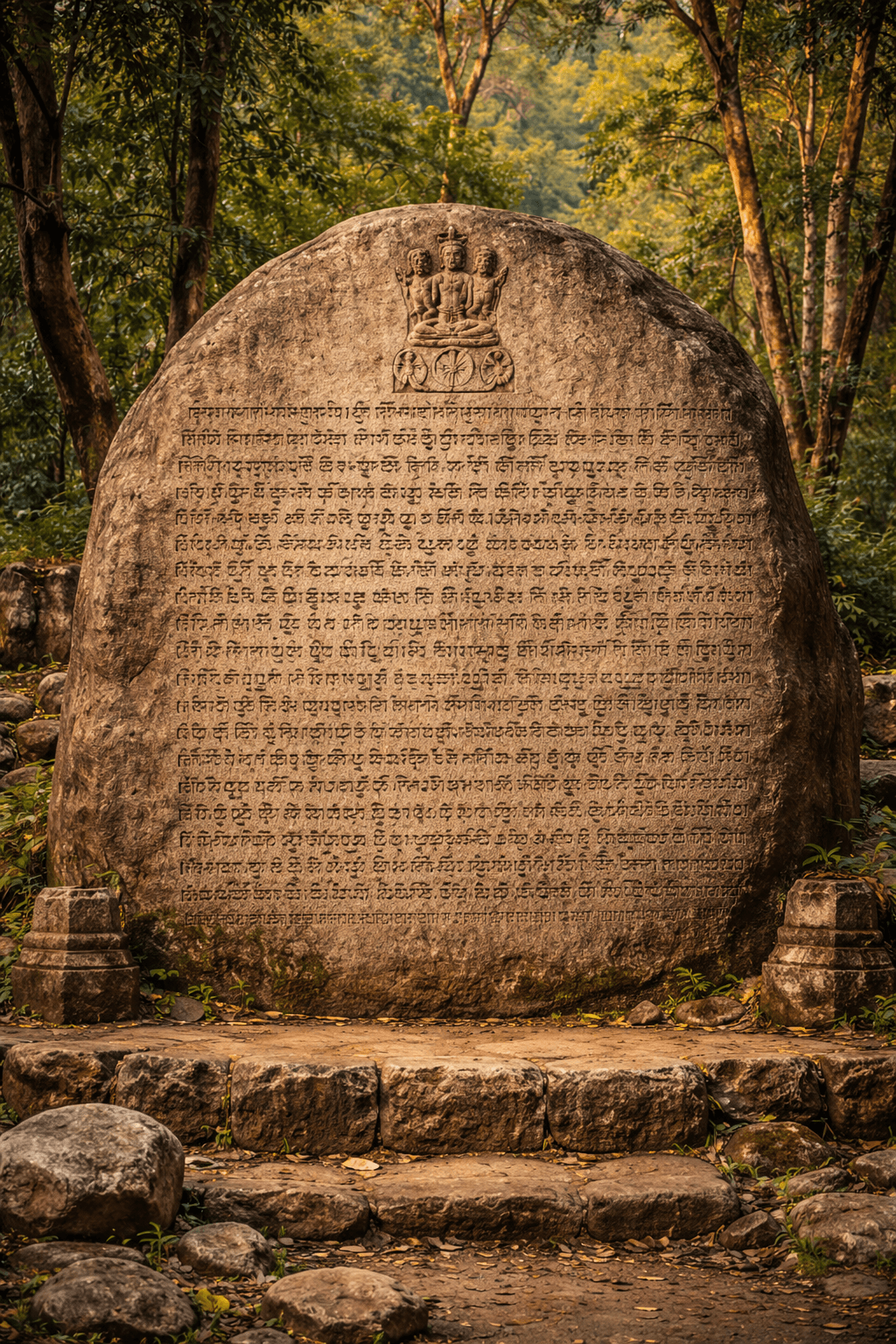
Numerous inscriptions mark the transition from myth to history:
Major Inscriptions
- Ashokan Inscription (257 BCE) at Kalsi, written in Pali
- Lakhamandal Inscription of Princess Ishwar
- Temple inscriptions at Gopeshwar, Kedarnath, Kalimath
- Cave inscriptions at Devprayag (Vaman Gufa) and Kalpanath
Ashoka’s Kalsi inscription promotes non-violence and medical care for humans and animals, calling the region Aparanta and its people Pulindas.
Coins and Copper Plates
- Kushan coins (1st–2nd century CE) from Muni-ki-Reti and Sumadi
- Kartikeyapur dynasty copper plates from Pandukeshwar, Champawat, Baijnath
Administrative System
Ancient records mention a well-organized administration with officials such as:
- Mahadandanayak (Commander)
- Akshapatalik (Account Officer)
- Kottpal (Fort Guard)
- Baladhyaksha (Army Chief)
Conclusion
The Metahistoric Period of Uttarakhand represents a rich blend of mythology, early social development, and emerging historical consciousness. Through sacred texts, legendary narratives, and early inscriptions, this period laid the cultural and spiritual foundation of Garhwal and Kumaon, guiding Uttarakhand toward the historical age.
Related Post :
Prehistoric Period of Uttarakhand
Uttarakhand Historical Period (Ancient Times)

Equili
폰테크
сглобяеми къщи
marijuana clone store New York
Thank you for visiting.
login dolly4d
Willkommen beihttps://das-accakappa.de/ Virginia Rose. Die Kollektion umfasst Eau de Cologne, die leicht auf Haut und Kleidung liegt. Der Duft offnet mit floralen Noten, weich und klar, bleibt subtil uber Stunden. Acca Kappa Virginia Rose ist in 100 ml Flakons erhaltlich, einfach in der Anwendung, angenehm zu tragen und fur Damen gedacht, die florale Eleganz mogen.
Hallo! https://das-sparkfun.de/ zeigt, wie MicroPython- und RedBoard-Kits Technik greifbar machen. Sensoren messen Licht, Abstand und Bewegung, OLED-Displays geben Daten aus, Motoren und Servos setzen Signale in Bewegung um. Tasten, Potentiometer und Kabel erleichtern Experimente, alles passt auf das Steckboard, ohne Loten. Fur Maker, Schuler oder Hobbyisten sind die Kits ubersichtlich aufgebaut, Schritt-fur-Schritt-Projekte fuhren durch verschiedene Schaltungen und zeigen direkt, wie Sensoren, Motoren und Displays zusammenarbeiten. Zubehor wie USB-C-Kabel oder Qwiic-Module erweitern Moglichkeiten weiter.
Hallo, Freunde von Ordnung und Ideen! https://banborba.de/ steht fur Dinge, die funktionieren – stark, durchdacht, zuverlassig. Von Edelstahl-Tischen und Gasherden uber Wasserhahne, Steamer und Weinstander bis hin zu Dartboards oder Baumkletter-Sets. Hier zahlt jedes Detail, jedes Material, jede Schraube. Es ist das kleine Gluck, wenn alles seinen Platz hat und alles halt, was es verspricht. banborba – wo Alltag nicht kompliziert, sondern einfach gut gemacht ist.
Hallo an alle, die den Duft junger Blatter lieben. Mit https://das-viparspectra.de/ erwacht jedes Pflanzchen zum Leben, sanft gefuhrt vom prazisen Spiel aus Licht und Schatten. Ob winziger Spross oder kraftige Blute – die Lampen schaffen ein Klima, das nahrt, starkt und wachsen lasst. Technik und Natur tanzen hier in leuchtender Harmonie.
Hallo an alle, die gerne Neues entdecken. Bei https://sumeber.de/ treffen Bewegung und Alltag aufeinander – hier rollen Kinder auf leuchtenden Inlinern durch den Park, gleiten Jugendliche auf Waveboards durch die Stra?en, wahrend daheim Wasserhahne glanzen, Tische funkeln und Schirme Regen in Kunst verwandeln. Jedes Stuck bringt ein Stuck Freude in den Tag – leicht, clever, lebendig.
Hey everyone! If you’re planning an outdoor adventure, check out https://mycamelcrown.com/. You’ll find comfy, durable gear like hiking shoes, jackets, and even camping tents. They blend style with functionality, so you can stay comfy and look good while exploring. Definitely worth a look if you love the outdoors!