Soil of Uttarakhand: Types, Characteristics, and Agricultural Importance
Uttarakhand is a Himalayan state where nature, mountains, forests, and agriculture are deeply connected. Today, we will understand the soil of Uttarakhand, especially the mountain soil of Uttarakhand, to know where the soil is fertile, where it is less fertile, and how it supports agriculture and human life.
The mountain soil of Uttarakhand is considered extremely useful because the traditional lifestyle of the people has always been linked with farming. Although modern lifestyles have changed, agriculture still remains the backbone of many hill communities. Therefore, understanding soil types helps us appreciate both natural diversity and sustainable development.
What Is Soil? – Basic Definition
Soil is a natural layer formed on the Earth’s surface through the weathering of rocks, mixed with organic matter, water, air, and microorganisms.
In addition to minerals, soil contains:
- Organic matter
- Water
- Air
- Bacteria and microorganisms
The proportion of these elements varies from place to place, which results in different soil types.
Classification of Soil in India (ICAR)
According to the Indian Council of Agricultural Research (ICAR), Indian soil is divided into eight major types:
- Alluvial soil
- Red soil
- Black soil
- Laterite soil
- Desert soil
- Mountain or forest soil
- Peat and marshy soil
- Saline and alkaline soil
👉 Uttarakhand mainly falls under Mountainous or Forest Soil, which:
- Is rich in organic matter
- Lacks lime and phosphorus
- Contains abundant fauna and microorganisms
Major Types of Soil Found in Uttarakhand
Due to variations in altitude, climate, vegetation, and rainfall, Uttarakhand has a wide range of soil types.
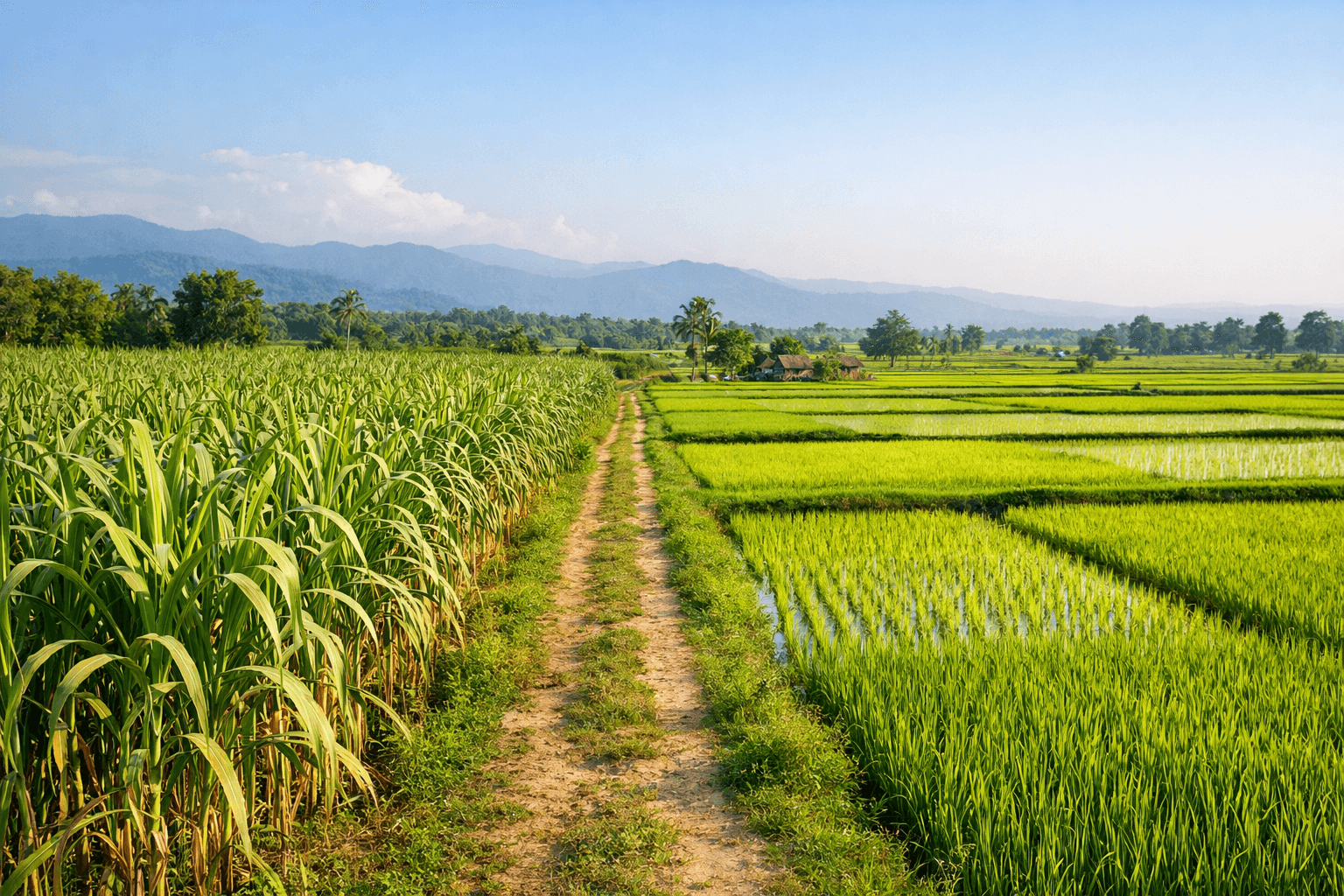
1. Terai Soil
📍 Location: Southern Uttarakhand (Dehradun to Udham Singh Nagar)
Terai soil is formed by the deposition of fine particles carried by rivers.
Characteristics:
- Flat and marshy
- Moist and fertile
- Deficient in nitrogen and phosphorus
Major Crops:
- Sugarcane
- Paddy (rice)
2. Bhanwar Soil
📍 Location: North of Terai and south of Shivalik hills
This soil is formed by coarse sand and pebbles deposited by Himalayan rivers.
Characteristics:
- Very shallow
- Poor water retention
- Unsuitable for agriculture
3. Grassland Soils
📍 Location: River banks and low-lying grassland areas
These soils are divided into five types:
- Clay loam
- Highly calcareous loam
- Low calcareous loam
- Non-lime loam
- Sandy loam
These soils support natural grasslands and grazing.
4. Tertiary Soil
📍 Location: Shivalik hills and Doon Valley
Characteristics:
- Light, sandy, and porous
- Low moisture retention
- Low organic matter
However, Doon Valley soil holds more moisture and vegetation compared to other areas.
5. Quartz Soil
📍 Location: Bhimtal region, Nainital
This soil is formed from the disintegration of shale and quartz rocks.
Characteristics:
- Light in texture
- Infertile
- Poor agricultural value
6. Volcanic Soil
📍 Location: Bhimtal region, Nainital
Formed due to igneous rock fissures, this soil is:
- Light and sandy
- Suitable for agriculture
7. Loamy Soil
📍 Location: Lower slopes of Shivalik hills and Doon Valley
Characteristics:
- Balanced texture
- Contains lime, iron, and organic matter
- Good for cultivation
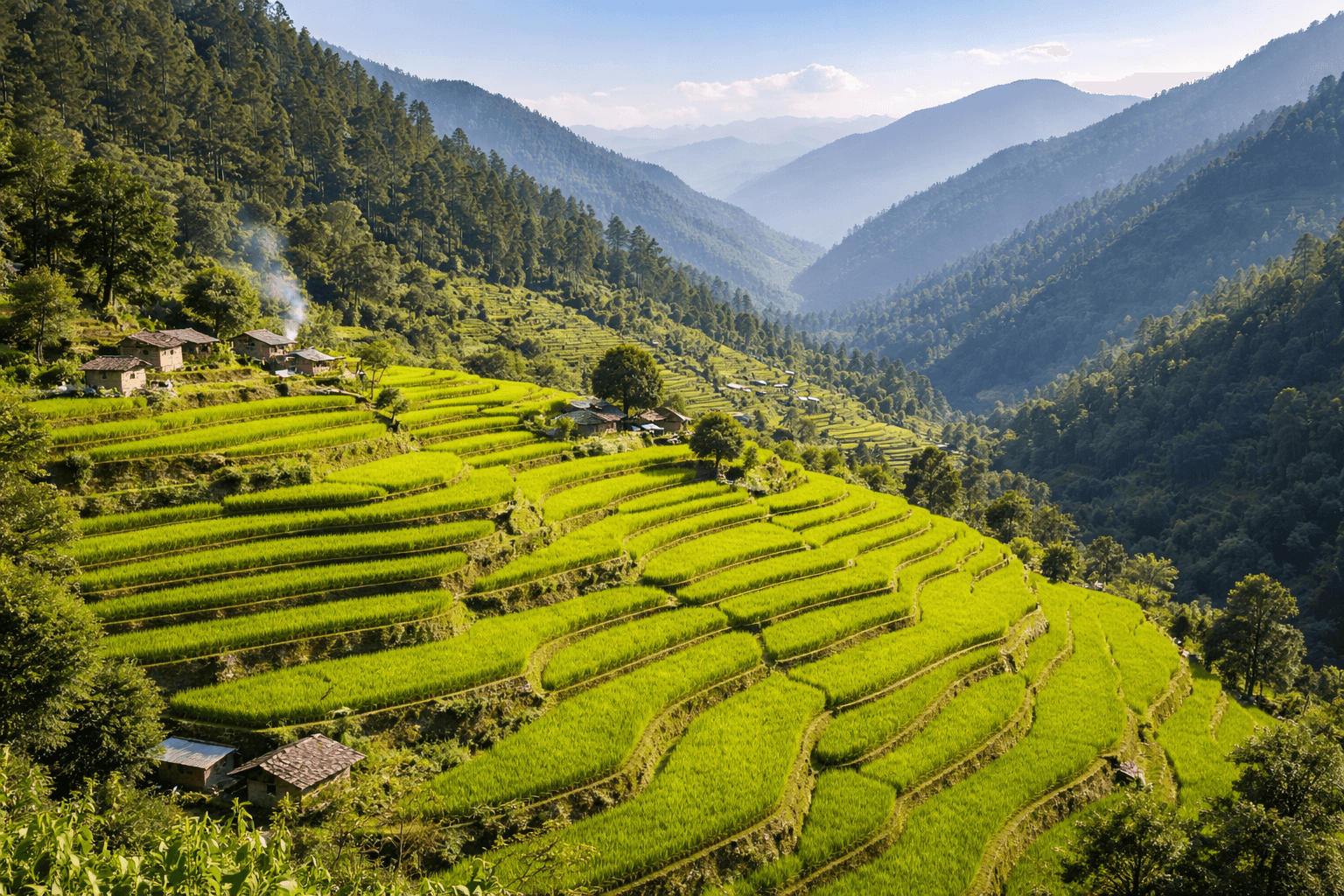
8. Brownish-Reddish-Yellow Soil
📍 Location: Nainital, Mussoorie, Chakrata
This soil is formed from sandstone, shale, and dolomite rocks.
Characteristics:
- Brown, red, or yellow in color
- High moisture retention
- Highly fertile
9. Red Soil
📍 Location: Mountain slopes
Characteristics:
- Unorganized structure
- Low fertility
- Found on steep slopes
10. Brown Forest Soil
📍 Location: Forested regions of Uttarakhand
Characteristics:
- Rich in organic matter
- Deficient in lime and phosphorus
- Supports dense forests
11. Ash Soil
📍 Location: Mountain slopes and sub-tropical regions
This soil is commonly found in low-sloping areas and supports natural vegetation.
12. Highest Mountain Shallow Soil
📍 Location: High-altitude Himalayan regions
Characteristics:
- Thin soil layer
- Low rainfall
- Poor vegetation
- Completely immature soil
13. High Plains (Alpine Pasture) Soil
📍 Location: Above 4000 meters altitude
Characteristics:
- Mildly alkaline
- Rich in organic matter
- Low moisture due to glacial erosion
- Known as alpine pasture soils
14. Sub-Mountainous Soil
📍 Location: Lower grasslands with pine and spruce forests
Characteristics:
- High biomass
- Upper layer sandy and compact
- Lower layer unorganized
- High humidity due to rainfall
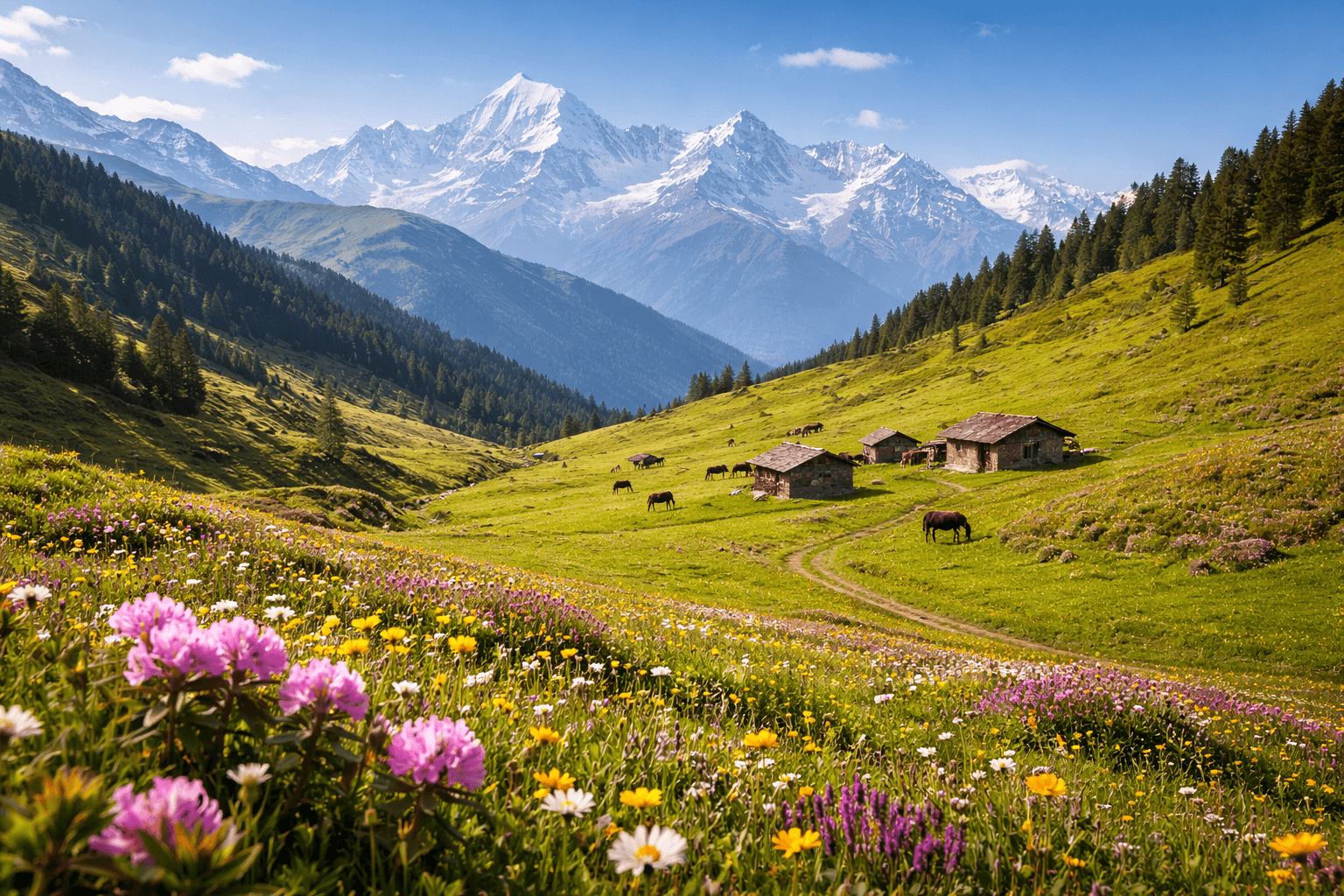
Importance of Mountain Soil of Uttarakhand
- Supports agriculture and horticulture
- Maintains forest ecosystems
- Helps in water retention and biodiversity
- Forms the base of traditional hill farming
Conclusion
The soil of Uttarakhand reflects the diversity of its geography, climate, and culture. From fertile Terai plains to alpine pastures, each soil type plays a vital role in sustaining life, agriculture, forests, and livelihoods. Understanding the mountain soil of Uttarakhand helps us protect this fragile Himalayan ecosystem and promote sustainable development.
🌱 Explore more geography and history articles to understand Uttarakhand better.
Releted Post: