Scheduled Castes of Uttarakhand: Population, District-wise Distribution, Literacy & Reservation
Introduction: Scheduled Castes of Uttarakhand
Today, we are discussing Scheduled Castes of Uttarakhand, an important and socially significant topic in the demographic and historical study of the state. In Uttarakhand, 65 castes have been officially declared as Scheduled Castes (SCs) by the State Government.
This article provides a detailed overview of the Scheduled Castes of Uttarakhand, including population data, district-wise distribution, literacy rates, and reservation provisions. The information is based mainly on Census 2011 data, making it reliable and factual. Let us begin this informative journey.
Population of Scheduled Castes in Uttarakhand (Census 2011)
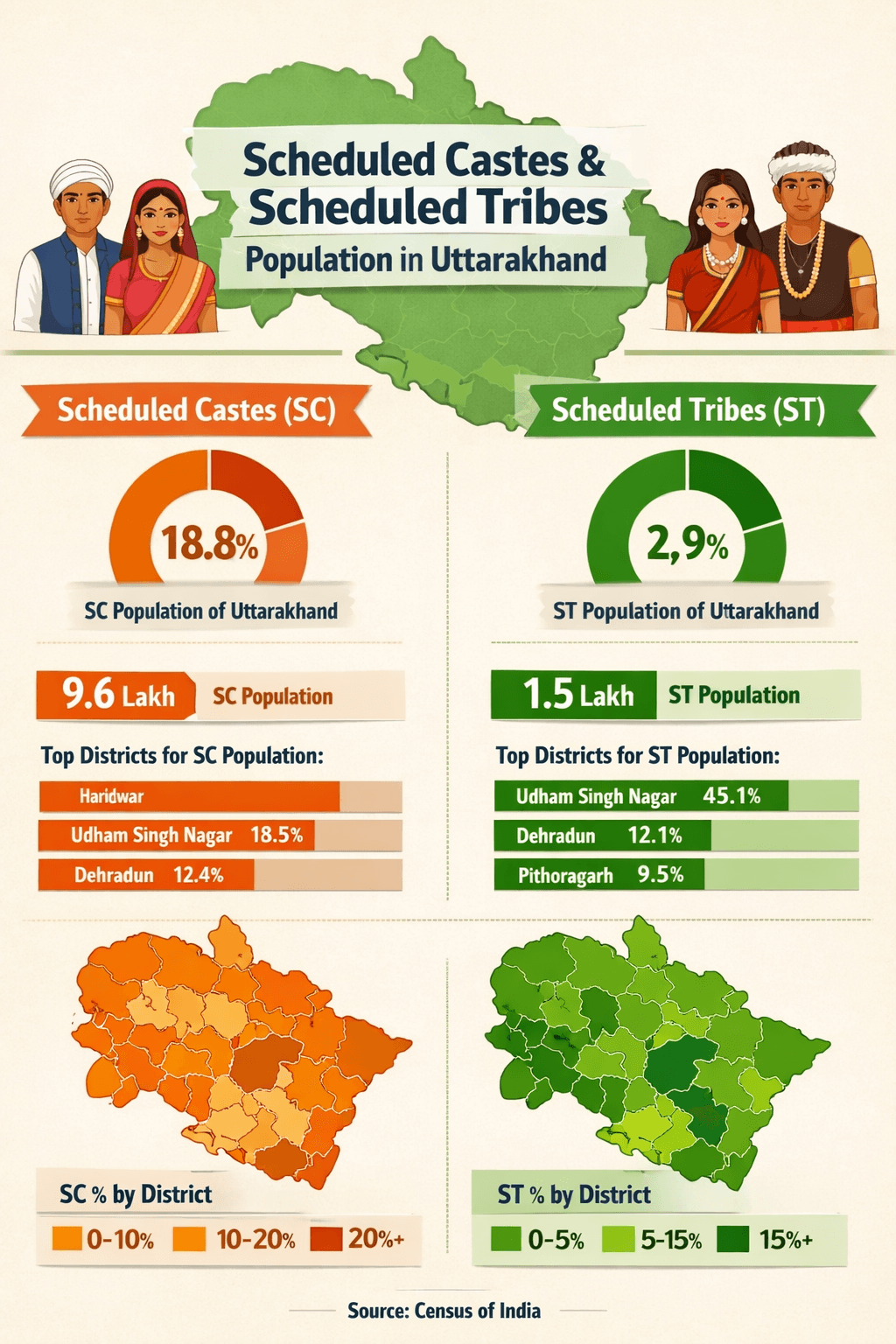
According to the final Census 2011 figures, the total population of Uttarakhand is 10,086,292. Out of this, the combined population of Scheduled Castes and Scheduled groups is 2,184,419, which accounts for 21.8% of the total population of the state.
State-Level Demographic Details (SC & ST)
| Item | Scheduled Castes (SC) | Scheduled groups (ST) |
|---|---|---|
| Total Population | 1,892,516 | 291,903 |
| Percentage of State Population | 18.8% | 2.9% |
| Male Population | 986,586 (52.13%) | 148,669 (50.93%) |
| Female Population | 923,930 (47.87%) | 143,235 (49.07%) |
| Sex Ratio | 936 | 963 |
The data shows that the Scheduled Caste population forms a significant portion of Uttarakhand’s population, contributing greatly to its social structure.
List of Scheduled Castes in Uttarakhand (65 Castes)
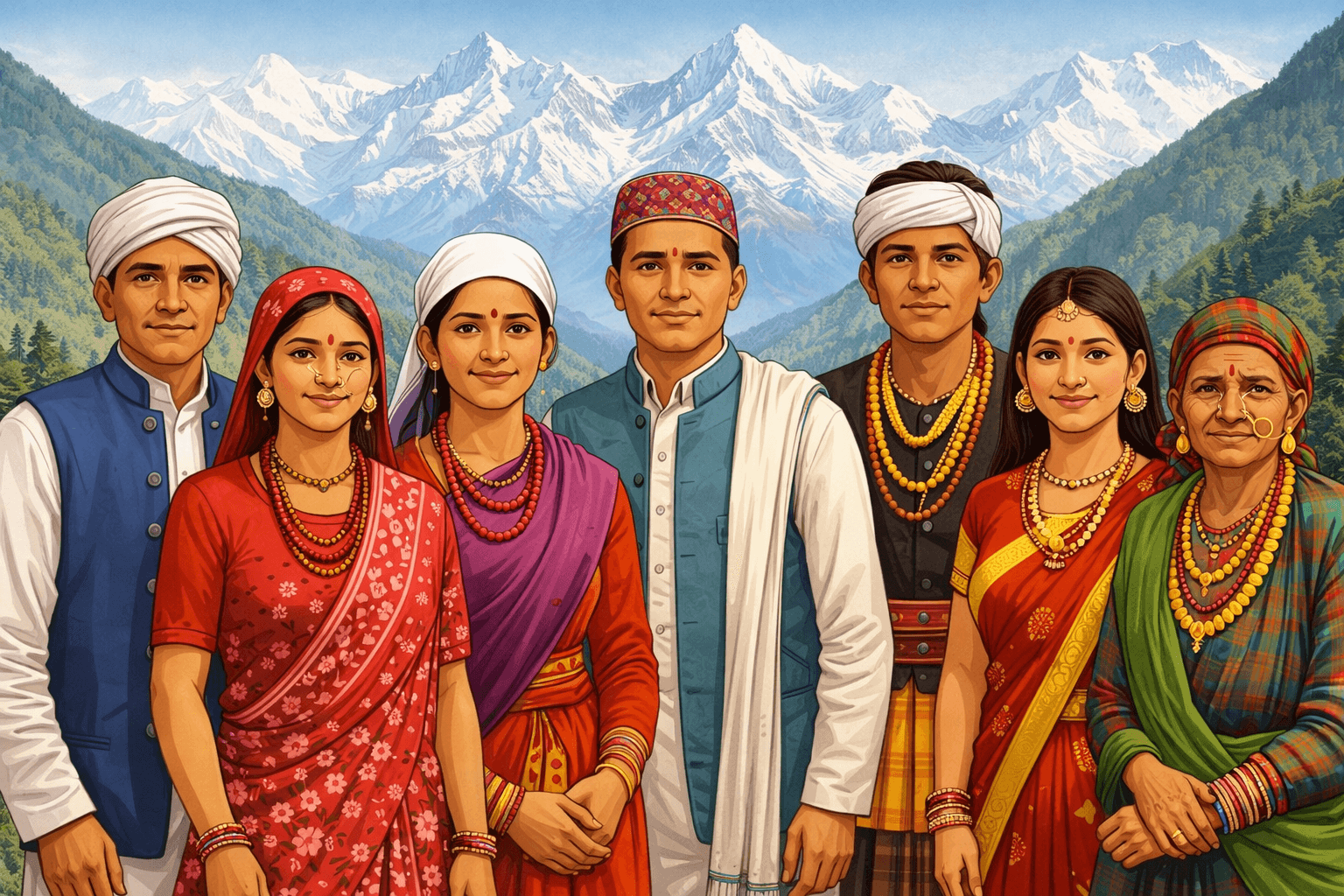
The Uttarakhand State Government has officially recognized 65 castes as Scheduled Castes. These include:
Agaria, Badhik, Badi, Bahlia, Baiga, Beswar, Bajniya, Bajgi, Balhar, Balai, Balmik, Bengali, Banmanush, Bansfor, Barwar, Basor, Bavaria, Beldar, Beria, Buntu, Bhuiya, Bhuiyar, Boria, Chamar (Busia, Jhusia and Jatav), Cheri, Davagar, Dhangad, Dhanuk, Dharkar, Dhobi, Dom, Domar, Dusadh, Dharmi, Dhariya, Gaur, Gwal, Habuda, Hari, Hela, Kanjar, Kanjad, Kapadia, Karwal, Khareta, Kharwar (except forest dwellers), Khatik, Kharit, Kol, Kori, Korba, Lalvegi, Majhwar, Majhabi, Musahar, Nut, Pan, Parhiya, Pasi-Tarmali, Patri, Sahariya, Sanoria, Sasia, Tureh, Rawat, and traditional craftsmen communities.
These communities have been recognized to ensure social justice, representation, and equal opportunities.
District-wise Scheduled Caste Population in Uttarakhand
The following table shows Scheduled Caste population and percentage in each district of Uttarakhand:
| District | SC Population | SC % of District Population |
|---|---|---|
| Uttarkashi | 80,567 | 24.41% |
| Chamoli | 79,317 | 20.25% |
| Rudraprayag | 47,679 | 19.68% |
| Tehri | 102,130 | 16.50% |
| Dehradun | 228,901 | 13.49% |
| Pauri | 122,361 | 17.80% |
| Pithoragarh | 120,378 | 24.90% |
| Bageshwar | 72,061 | 27.73% |
| Almora | 150,995 | 24.25% |
| Champawat | 47,389 | 18.25% |
| Nainital | 191,206 | 20.03% |
| Udham Singh Nagar | 238,264 | 14.45% |
| Haridwar | 411,274 | 21.76% |
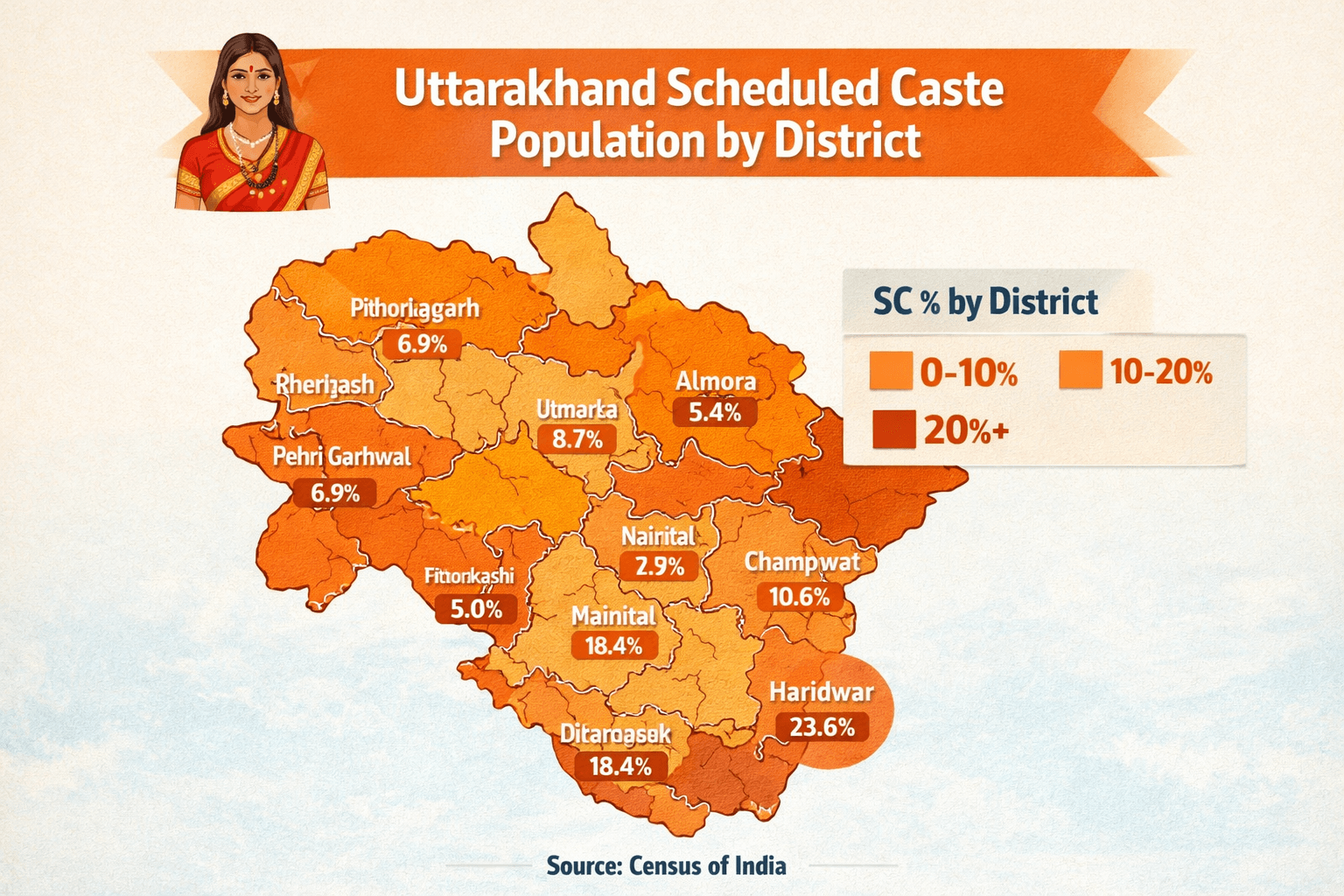
Key Observations from District Data
- Highest SC population: Haridwar (411,274)
- Lowest SC population: Champawat (47,389)
- Highest SC percentage: Bageshwar (27.73%)
- Lowest SC percentage: Dehradun (13.49%)
Top 5 Districts by SC Population
Haridwar, Udham Singh Nagar, Dehradun, Nainital, Almora
Bottom 5 Districts by SC Population
Champawat, Rudraprayag, Bageshwar, Chamoli, Uttarkashi
Literacy Rate among Scheduled Castes in Uttarakhand
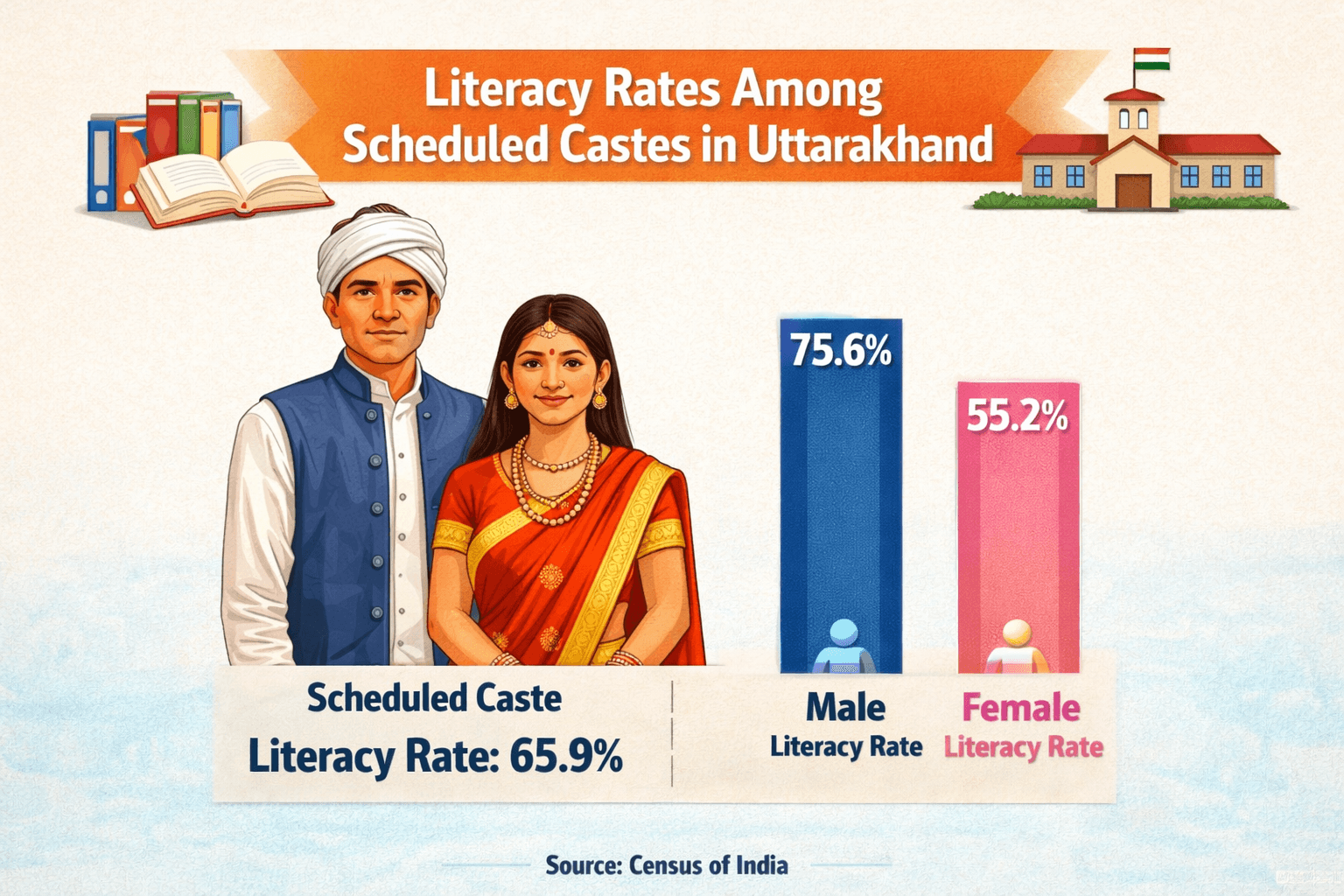
According to Census 2011, the average literacy rate among Scheduled Castes in Uttarakhand is 74.4%.
- Male literacy: 84.3%
- Female literacy: 64.1%
District-wise Literacy Rates (SC)
| District | Average % | Male % | Female % |
|—-|—-|—-|
| Nainital | 81.2 | 89.2 | 72.5 |
| Chamoli | 79.2 | 90.2 | 68.2 |
| Pauri | 78.9 | 90.2 | 68.3 |
| Pithoragarh | 78.4 | 89.3 | 67.7 |
| Rudraprayag | 78.0 | 90.2 | 66.2 |
| Bageshwar | 76.7 | 88.4 | 65.4 |
| Almora | 76.3 | 88.5 | 65.2 |
| Champawat | 76.0 | 88.0 | 63.6 |
| Dehradun | 75.3 | 82.4 | 67.5 |
| Tehri | 73.3 | 85.1 | 62.0 |
| Haridwar | 70.7 | 80.3 | 59.9 |
| Uttarkashi | 70.6 | 83.1 | 57.8 |
| Udham Singh Nagar | 67.3 | 77.1 | 56.5 |
Reservation for Scheduled Castes in Uttarakhand
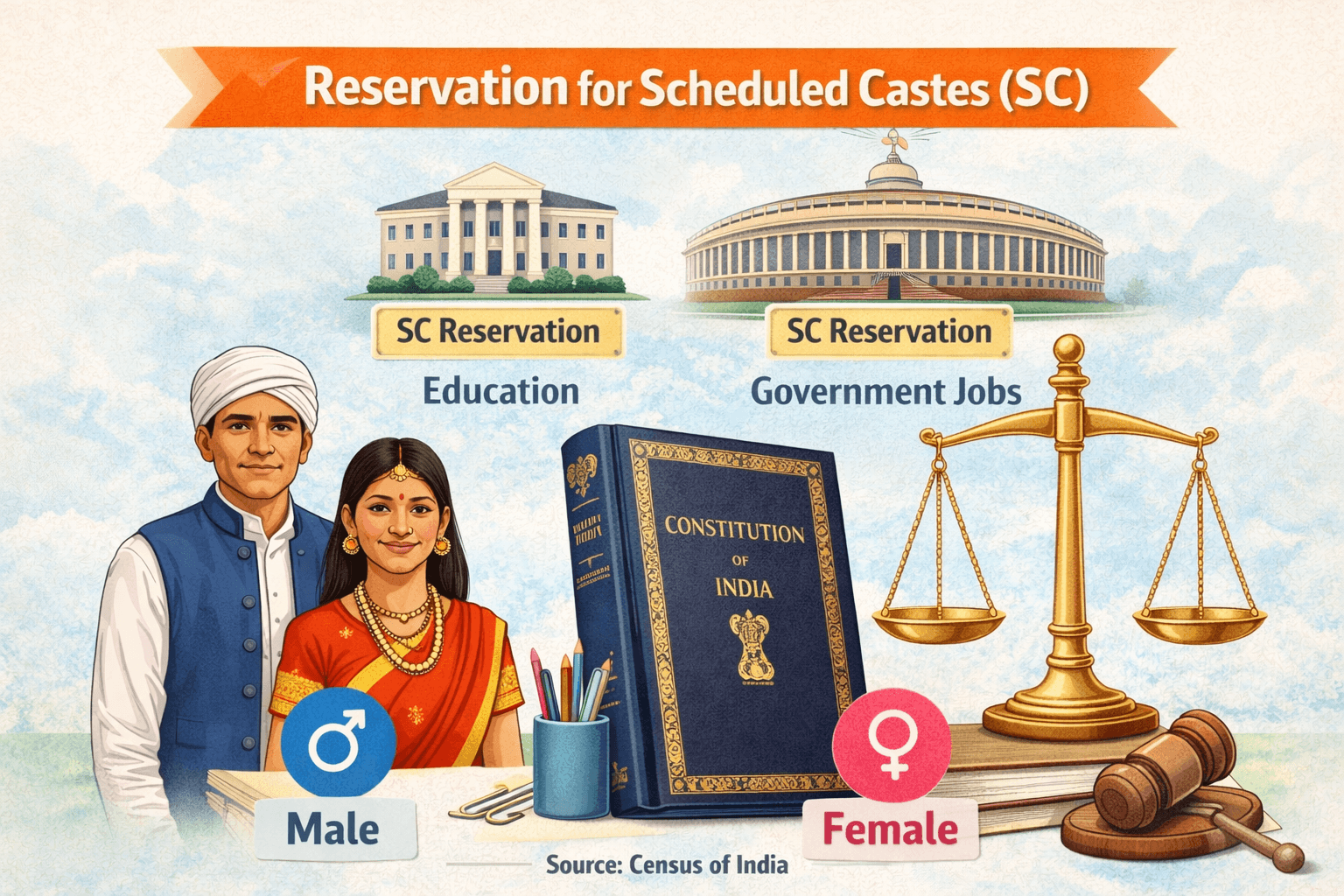
Reservation plays a crucial role in ensuring political and social representation.
Political Reservation
- 1 Lok Sabha seat (Almora) is reserved for Scheduled Castes.
- Out of 70 seats in the Uttarakhand Legislative Assembly, 13 seats are reserved for Scheduled Castes.
Reserved Assembly Constituencies
Jwalapur, Bhagwanpur, Jhabreda (Haridwar), Chakrata, Rajpur (Dehradun), Bajpur (Udham Singh Nagar), Pauri, Ghansali (Tehri), Purola (Uttarkashi), Tharali (Chamoli), Nainital, Someshwar (Almora), Bageshwar, and Gangolihat (Pithoragarh).
Reservation in Services and Education
Since July 2001, a provision of 19% reservation has been implemented for Scheduled Castes in:
- Government services
- Educational institutions
- Public sector undertakings
- Corporations and state enterprises
Conclusion
The Scheduled Castes of Uttarakhand form a vital part of the state’s demographic, cultural, and social framework. With 65 recognized castes, significant population share, improving literacy rates, and constitutional safeguards through reservation, Scheduled Castes continue to progress steadily.
Understanding this data helps in appreciating Uttarakhand’s inclusive development journey and highlights the importance of equitable growth for all communities.
Related Post:
What Is Dehradun Famous For? Complete History & Tourist Guide