A Journey into the Dawn of Civilization
When we explore Prehistoric Times in Uttarakhand, we begin a journey into a remote and fascinating chapter of human history. Although much of what we know is gleaned from archaeological finds rather than written records, the region that is now the Indian state of Uttarakhand offers tantalising evidence that it played host to human activity long before the familiar chapters of kings and kingdoms.
The Landscape and Environment
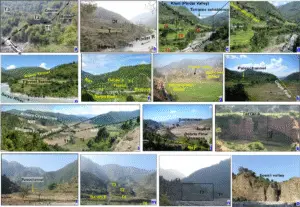
In the context of Prehistoric Times in Uttarakhand, it is worth remembering that the Himalayan terrain presented both challenge and opportunity for early human communities. The high valleys, rocky shelters, river-banks and forested slopes created niches where people could live, hunt and gather. According to a survey of geological and prehistoric context for Uttarakhand, artifacts such as hand-axes, cleavers and scrapers have been found in the river valleys of the Tons and Yamuna. The harsh winters, rugged terrain and seasonal movement would have required adaptability and resilience from any community living here during the Prehistoric Times in Uttarakhand.
Evidence of Stone Age Activity
When we talk about Prehistoric Times in Uttarakhand, one of the cornerstone findings is the tools uncovered in various parts of the state. For instance, microlithic tools associated with the Mesolithic era (10,000 to 5,000 BCE) have been documented in regions such as the Lal Dang area near Dehradun. The presence of these tools supports the idea that during the Prehistoric Times in Uttarakhand, hunter-gatherer groups were active—hunting small game, foraging plants and perhaps gradually experimenting with new ways of living.
Rock Art and Rock Shelters
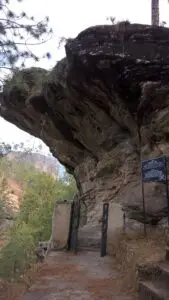
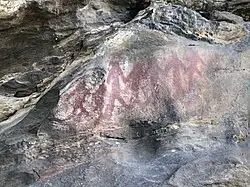
A particularly vivid dimension of the Prehistoric Times in Uttarakhand comes from the rock shelters and caves adorned with ancient paintings. In the district of Almora, at the site of Lakhudiyar Caves (literally “one lakh caves”), we find rock-art that depicts animals, humans and geometric motifs in black, red and white pigments. These paintings not only confirm human presence but also offer glimpses of how people may have perceived their world during the Prehistoric Times in Uttarakhand—navigating nature, animals, perhaps communal life and symbolic expression.
Transition into Settlement and Early Farming
The story of Prehistoric Times in Uttarakhand also points to a gradual transition. While the earliest phases are dominated by hunter-gatherer lifestyles, by the Neolithic period (roughly 5,000 to 2,000 BCE) we see indications of early agriculture and domestication in some parts of the state. For example, in regions like Almora and Pithoragarh evidence suggests early farming practices. the Prehistoric Times in Uttarakhand were not only about survival and movement but also about adapting, settling and transforming the relationship with the environment.
What About the 1900s?
Now, a question might arise: if we are discussing Prehistoric Times in Uttarakhand, why mention the 1900s? While the term “prehistoric” covers a deep past, many of the major discoveries and documentation in Uttarakhand were actually made in the 20th century—including the 1900s. For instance, the rock shelters such as Lakhudiyar were identified in the mid-20th century (1968) by researchers like Dr M. P. Joshi. Therefore, the era of the 1900s marks a period of rediscovery, scholarship and archaeological attention to the Prehistoric Times in Uttarakhand. In that sense, the 1900s serve as the backdrop when the prehistoric story of Uttarakhand began to emerge into modern awareness.
Significance for Culture and Heritage
Understanding Prehistoric Times in Uttarakhand has deep value for the region’s identity. The rock-art, tools and shelters connect present-day Uttarakhand to a human continuity that extends thousands of years. As one study explains, the mountainous state has been frequented and inhabited since prehistoric times, as shown through tools, shelters, megaliths and other evidence. This deep time perspective enriches local culture, traditions and sense of place. It means that the hills and valleys of Uttarakhand are not just scenic backgrounds but are themselves part of a human story stretching back far beyond living memory.
Challenges and Future Prospects
Reflecting on Prehistoric Times in Uttarakhand also leads us to consider the challenges of preservation and deeper research. Many of the shelters and rock-art sites are remote, vulnerable to weathering, human impact and neglect. As archaeologists push further, many sites still remain poorly documented. Improved survey work, local awareness, tourism management and heritage protection are necessary to ensure that the story of Prehistoric Times in Uttarakhand is not lost. In the 1900s, the beginning of such documentation was laid; going forward in the 21st century the work continues.
Conclusion
In sum, the phrase Prehistoric Times in Uttarakhand captures a fascinating interplay of nature, human adaptation and time. From the rugged valleys and rock shelters to the discovery of ancient tools and art, this region holds a lesser-known but deeply meaningful chapter of Himalayan human history. The 1900s mark the era in which much of this story began to emerge in academic and public awareness—yet the deeper past continues to intrigue. For anyone interested in the roots of human habitation, the transformation of lifestyle, or the heritage of the Himalayan foothills, exploring the Prehistoric Times in Uttarakhand is a journey well worth taking.
Whether you walk through the caves of Almora, study the microliths of a river valley or simply reflect on the continuity of human life in the hills, remember that the phrase Prehistoric Times in Uttarakhand is more than just a keyword—it is an invitation to peer into the deep past of a remarkable land.
Related Post: