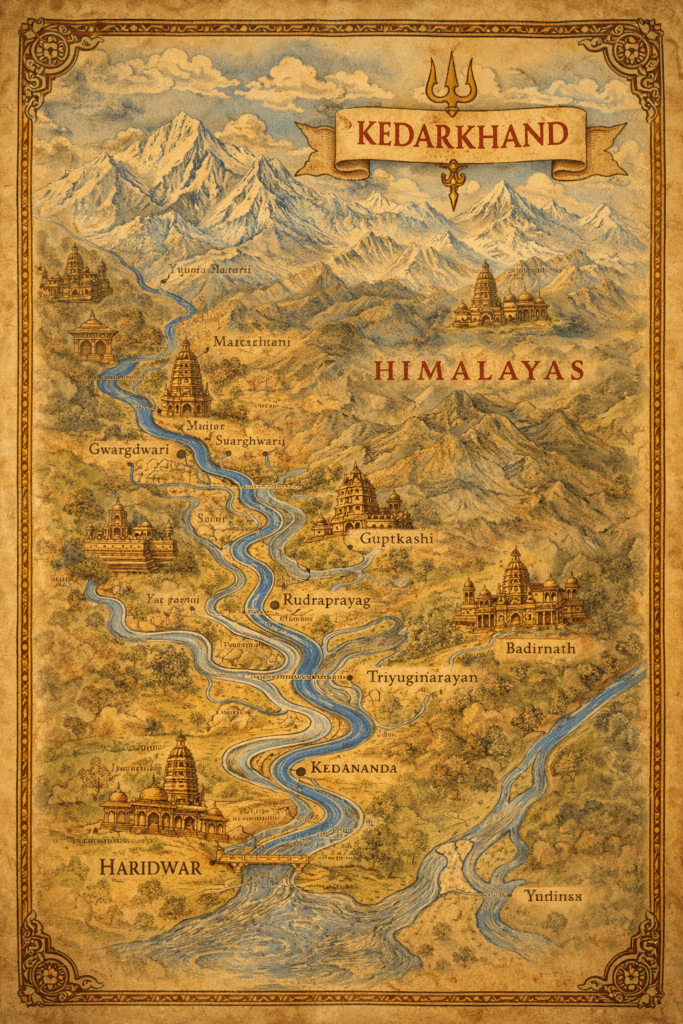
Introduction to the Prehistoric Period of Uttarakhand
The prehistoric period of Uttarakhand represents the earliest phase of human history in the Himalayan region, long before written records existed. This era is preserved through rock paintings, stone tools, caves, skeletal remains, pottery, and metal artifacts discovered across different parts of the state. These findings confirm that Uttarakhand was inhabited by early humans thousands of years ago.
Uttarakhand’s unique geography—high mountains, fertile valleys, dense forests, and perennial rivers—made it an ideal shelter for prehistoric communities. The mythological and cultural pride of the region is deeply rooted in these ancient times, when humans lived close to nature and gradually developed survival skills such as hunting, tool-making, and the use of fire.
This article explores the prehistoric times of Uttarakhand, focusing on important archaeological sites such as Lakhu Cave, Guarakhya Cave, Kimni Village, Malari Village, Lovethap, Hudli, Petshal, Ramganga Valley, Bankot, and the Garhwal region.
Historical Studies of Uttarakhand
The historical study of Uttarakhand is generally divided into three broad phases:
- Prehistoric Period
- Protohistoric Period
- Historical Period
Among these, the prehistoric period is the oldest and most fascinating, as it relies entirely on material evidence rather than written texts. Archaeologists and historians have reconstructed this era using rock art, tools, burial sites, and skeletal remains, which together provide insights into the lifestyle, beliefs, and social organization of early humans.
Prehistoric Times in Uttarakhand
During prehistoric times, humans in Uttarakhand primarily lived in natural caves and rock shelters. These shelters protected them from harsh weather, wild animals, and extreme Himalayan conditions. Over time, cave walls were decorated with symbolic and artistic paintings, showing humans, animals, hunting scenes, and ritual dances.
Food was obtained mainly through hunting animals and gathering fruits, roots, and tubers. Gradually, prehistoric humans learned the controlled use of fire, which helped them cook food, stay warm, and protect themselves from predators.
Major Prehistoric Sites of Uttarakhand
1. Lakhu Cave (Almora District)
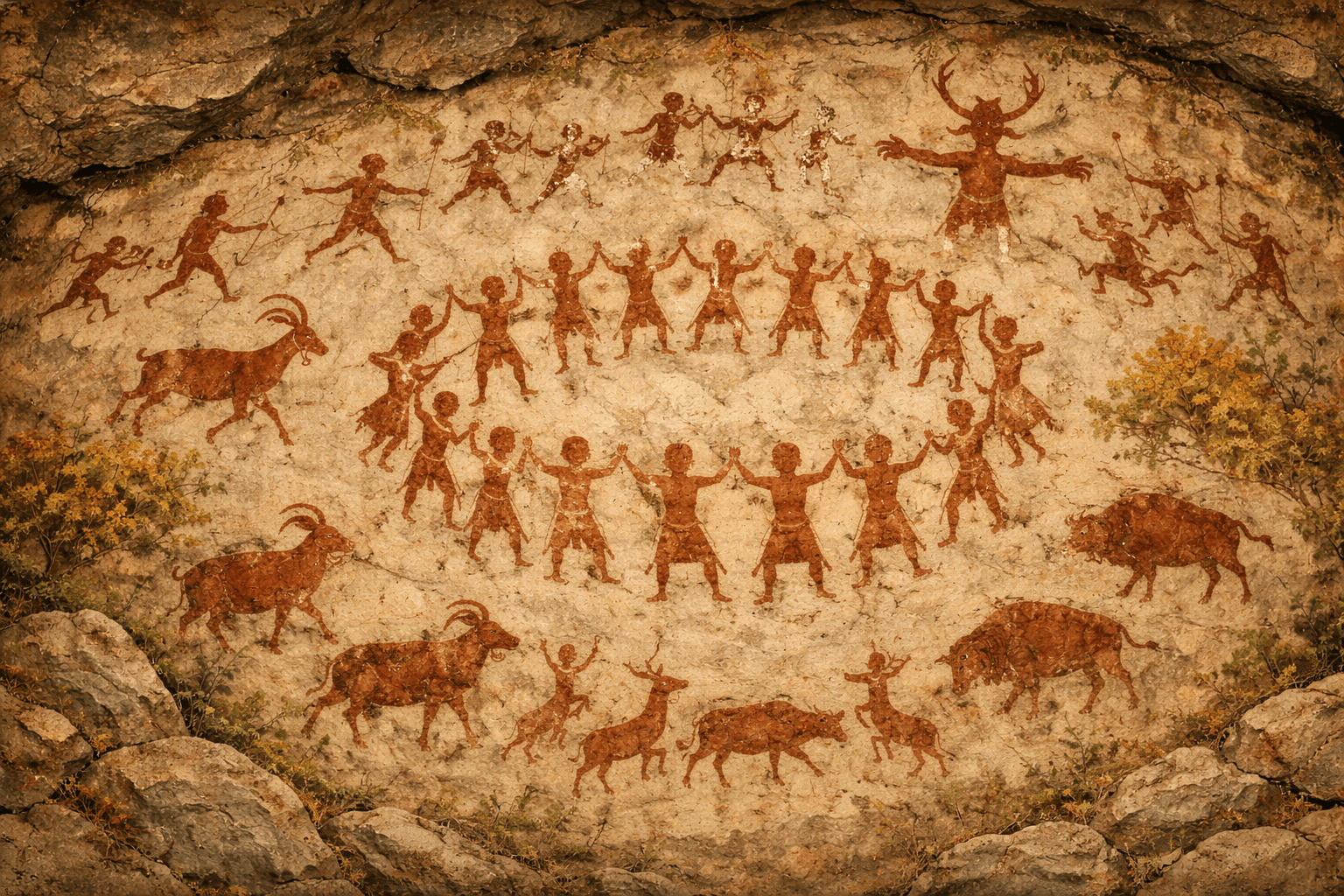
Lakhu Udyar, also known as Lakhu Cave, was discovered in 1963 near Dalband village, Barechina, Almora. This cave is one of the most important prehistoric sites in Uttarakhand.
The cave walls contain colorful rock paintings depicting:
- Human figures dancing alone or in groups
- Animals and birds
- Ritualistic and social activities
The use of natural colors shows early artistic expression and symbolic thinking among prehistoric humans.
2. Guarakhya Cave (Chamoli District)
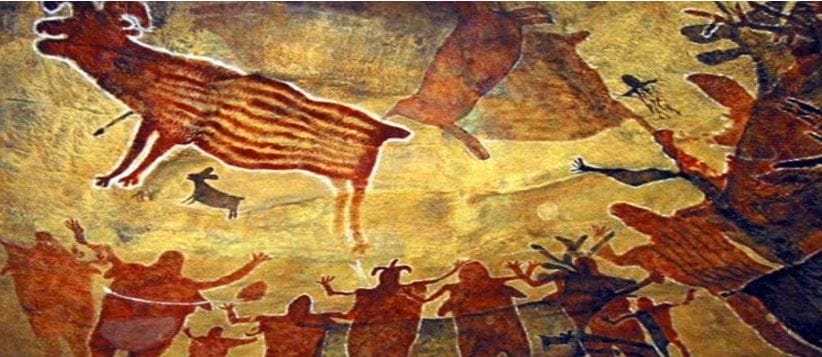
The Guarakhya Cave, located near Dugri village on the banks of the Alaknanda River, has revealed some of the most vivid prehistoric paintings in Uttarakhand.
These paintings include:
- Human figures
- Sheep, reindeer, and foxes
- Bright and well-preserved colors
Compared to Lakhu Cave, the Guarakhya Cave paintings are more detailed and expressive, indicating an evolution in artistic skills
3. Kimni Village (Chamoli District)
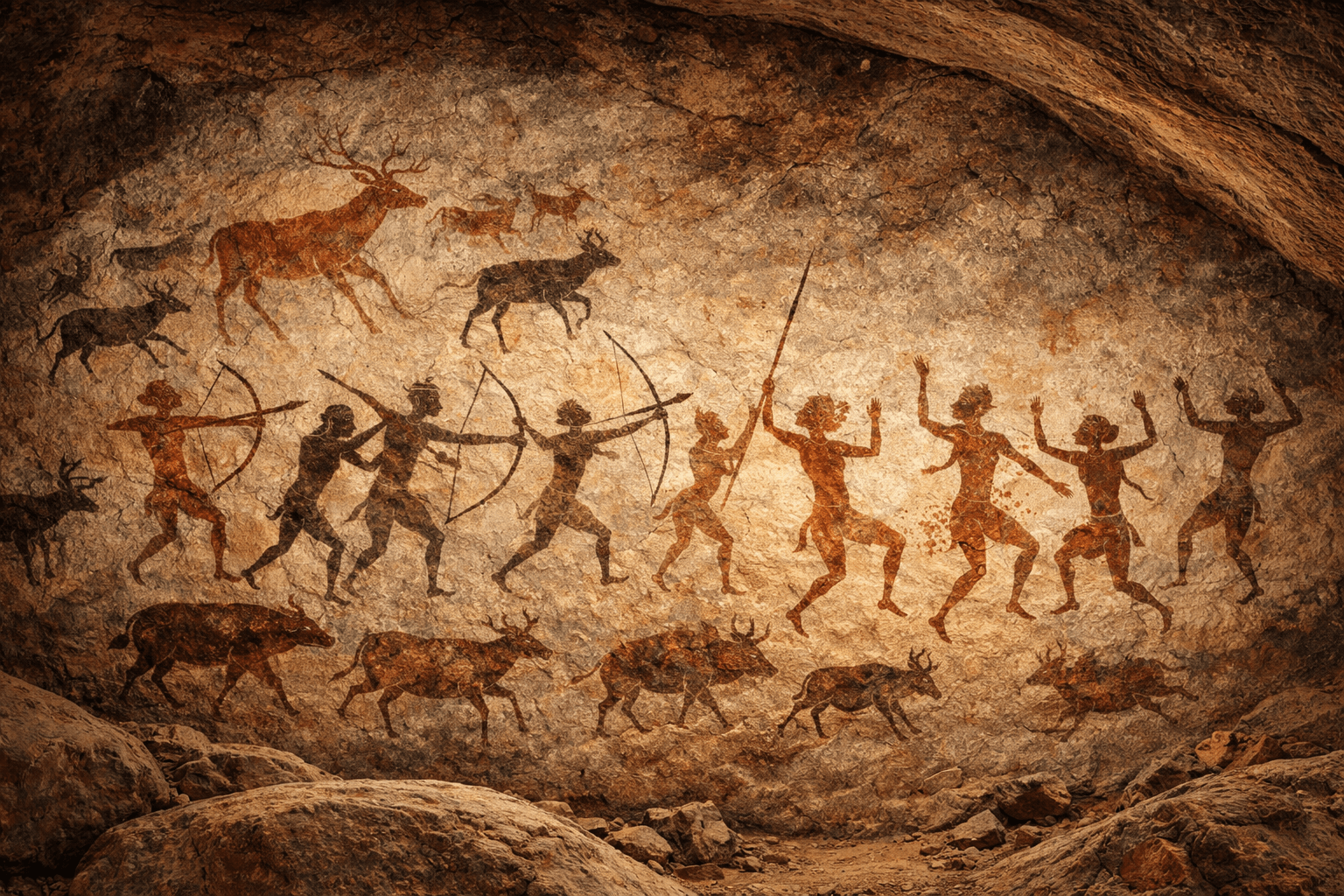
In Kimni village, near Tharali in Chamoli, archaeologists have found rock paintings and weapon illustrations painted in light white color.
The presence of weapon imagery suggests:
- Development of hunting tools
- Awareness of defense and survival strategies
These findings reflect an advanced stage of prehistoric life.
4. Malari Village (Chamoli District)
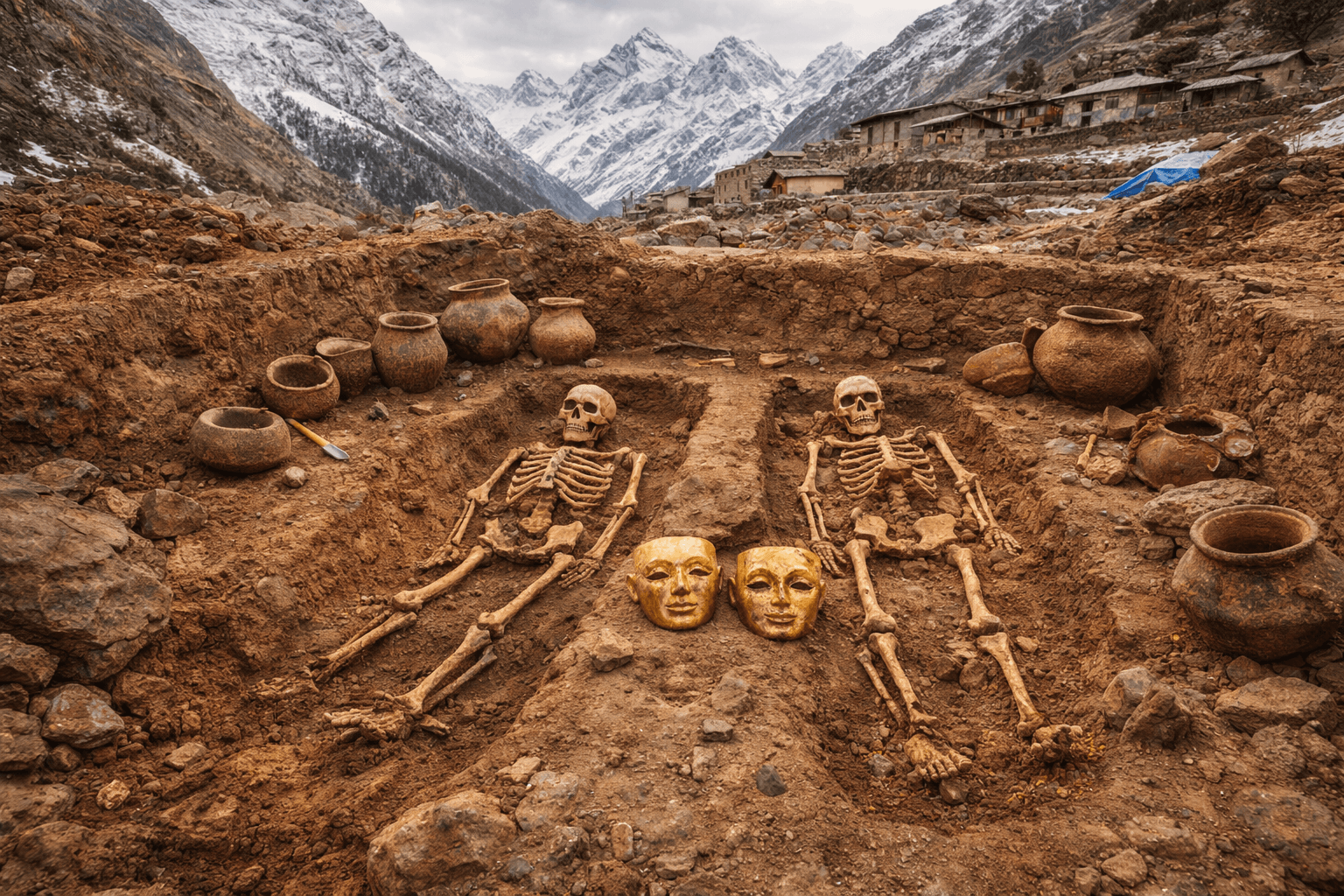
One of the most remarkable discoveries was made in 2002 at Malari village, near the Tibet border in Chamoli district, by researchers from Garhwal University.
Findings include:
- Thousands of years old male skeletons
- Pottery and animal remains
- Gold masks weighing about 5.2 kg
Scholars date these remains from 2000 BC to 6th century BC. Interestingly, the pottery style resembles that of the Swat Valley in Pakistan, suggesting cultural interaction.
5. Lovethap (Almora District)
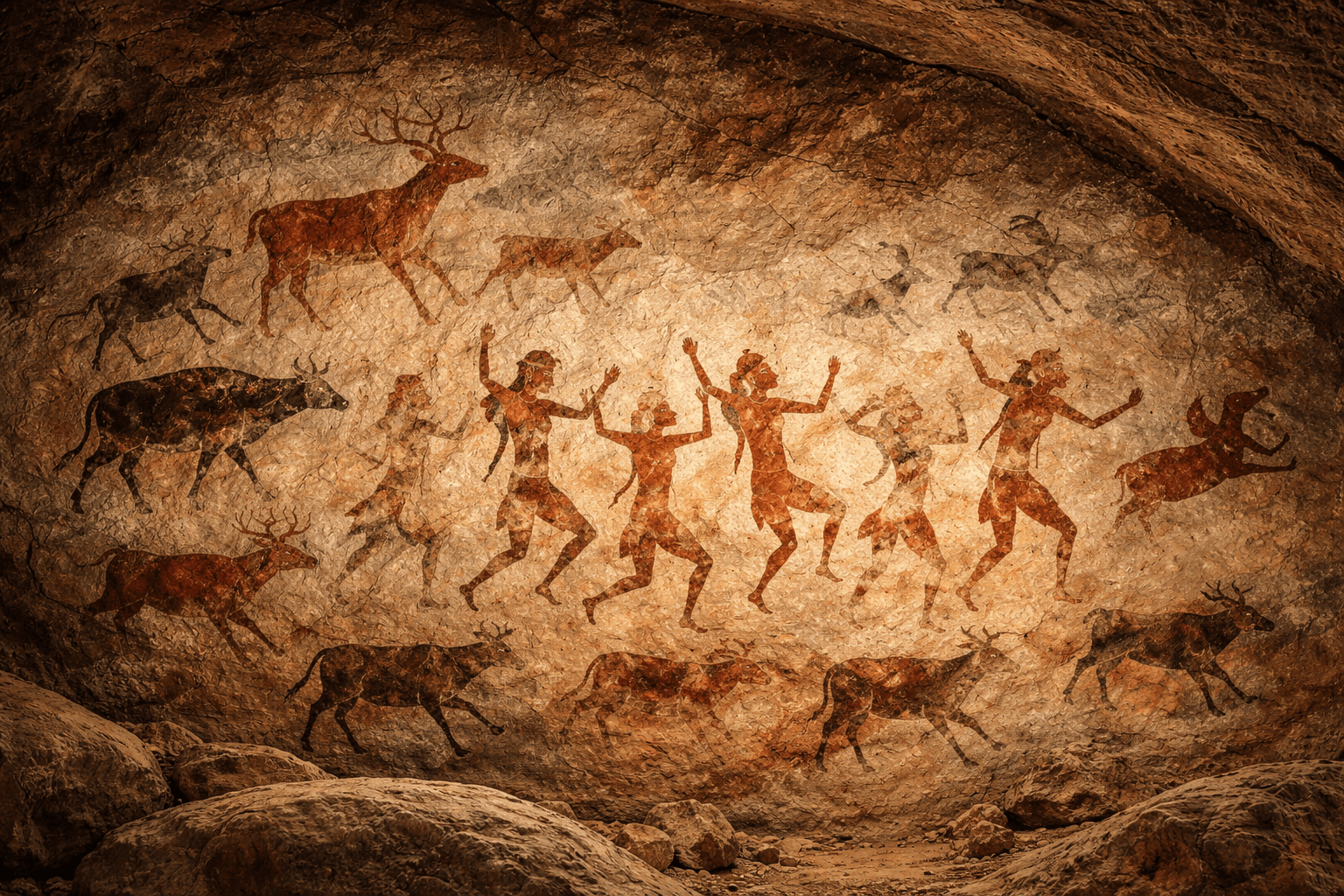
Rock paintings from Lovethap show humans:
- Hunting animals
- Dancing while holding hands
These scenes reflect social bonding and cooperative life in prehistoric communities.
6. Hudli (Uttarkashi District)
The rock paintings of Hudli are unique due to the use of blue color, which is rare in prehistoric art.
This indicates experimentation with different natural pigments and artistic innovation.
7. Petshal and Kaffarkot (Almora District)
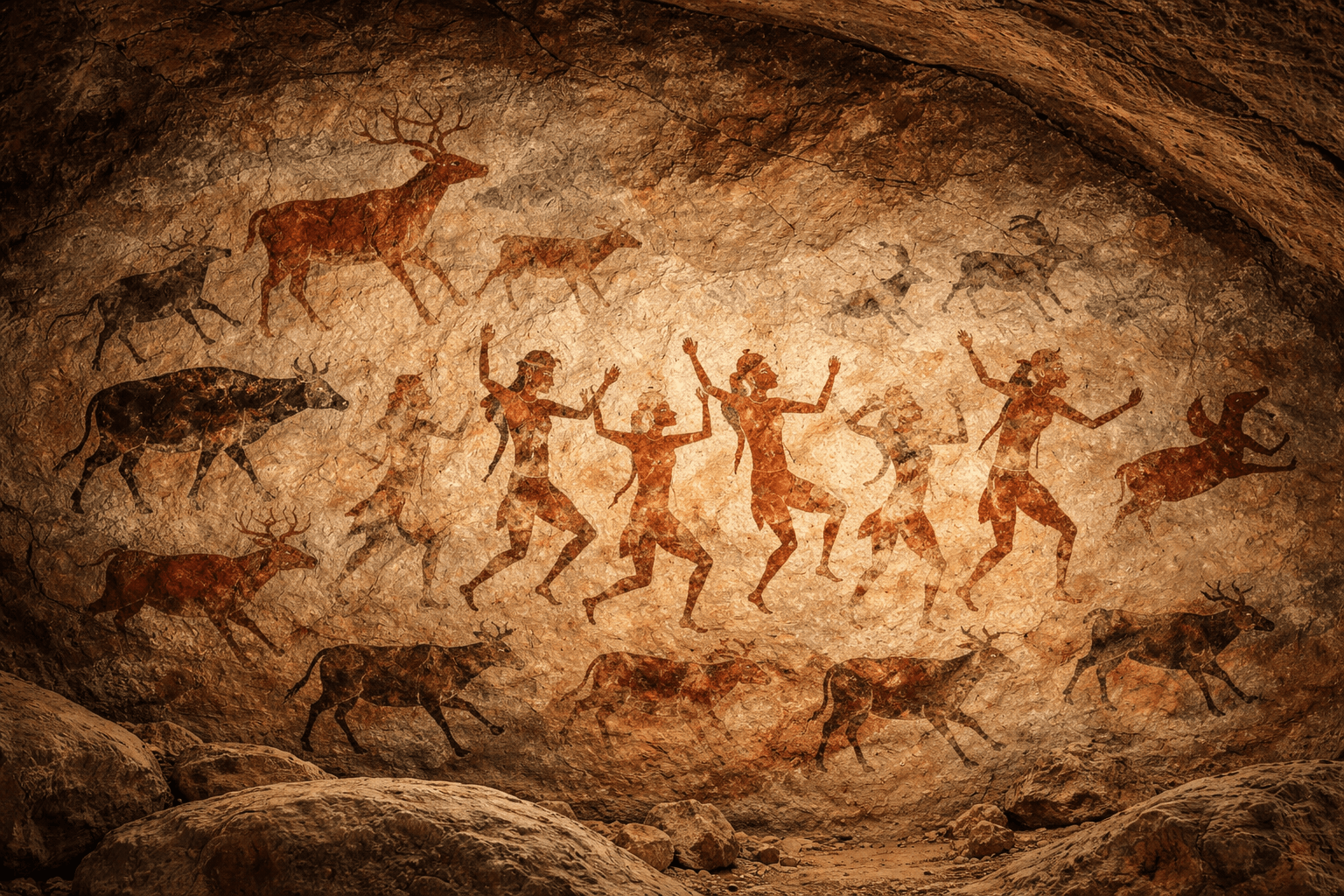
Between Petshal and Punakot villages, at Kaffarkot, brown-colored dancing anthropomorphic figures have been discovered.
These figures suggest:
- Ritual dances
- Spiritual or ceremonial practices
8. Fruit Area (Almora District)
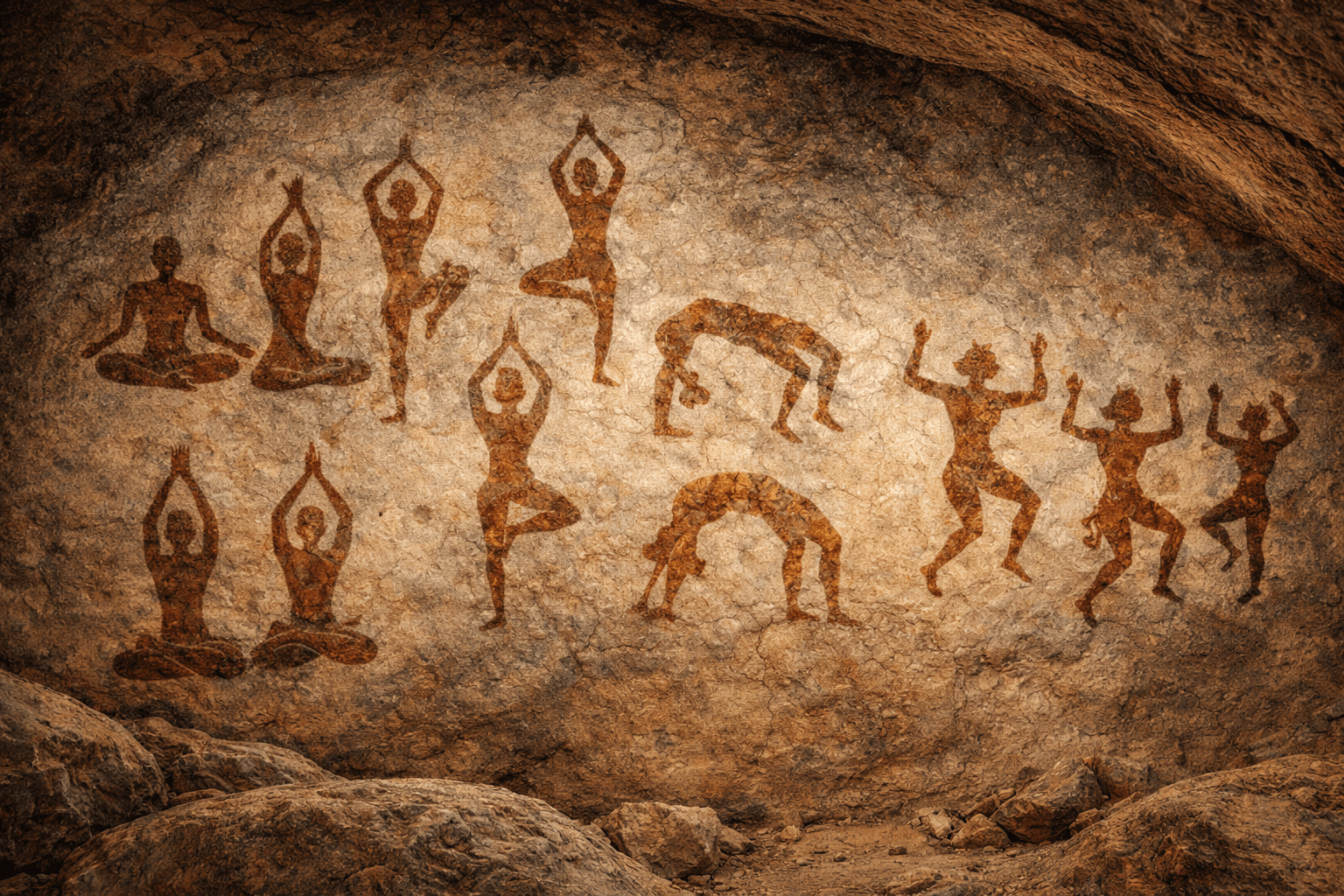
In the Fruit region of Almora, rock paintings show humans in:
- Yoga postures
- Dance positions
This reflects early spiritual awareness and physical discipline.
9. Ramganga Valley
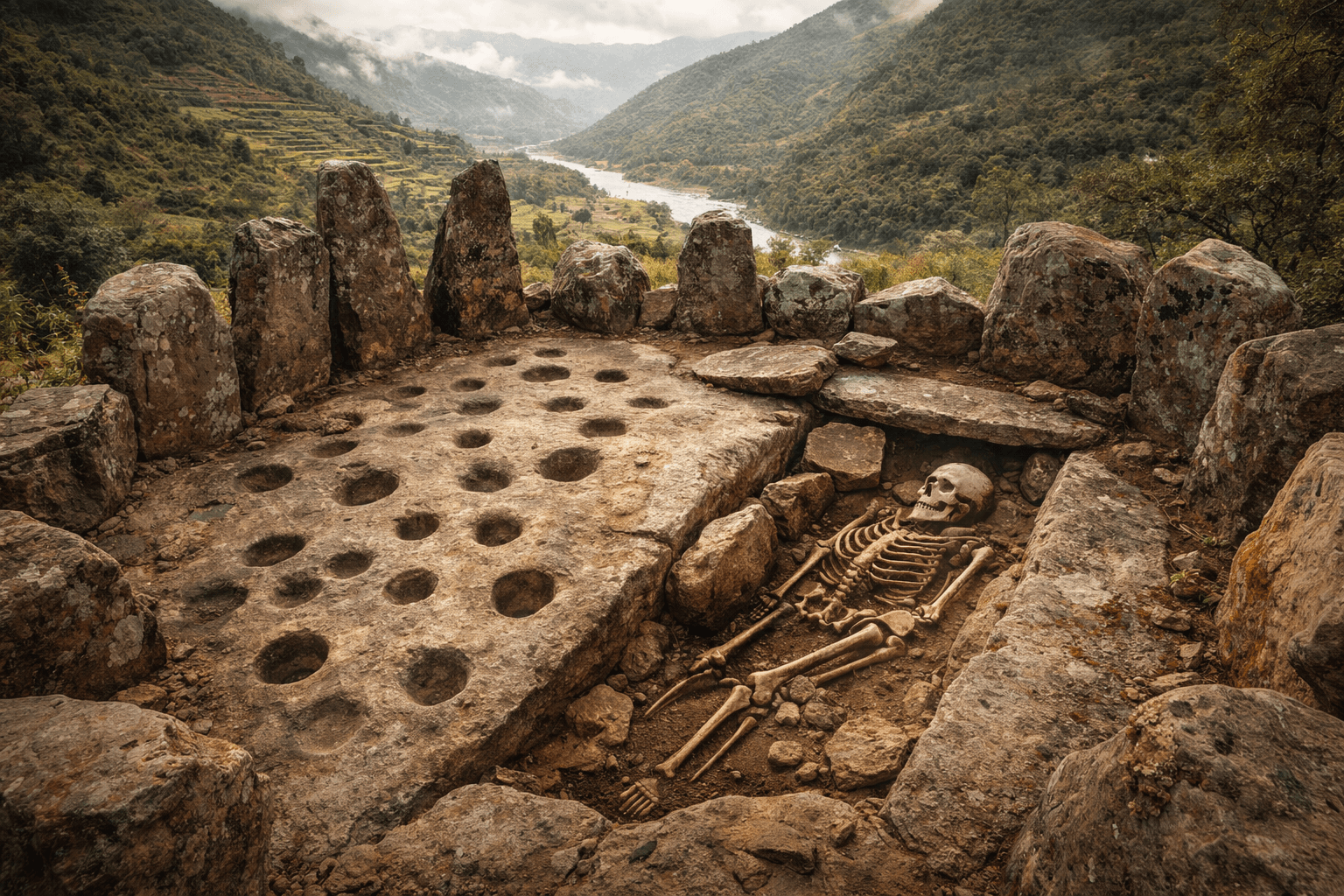
The Ramganga Valley has revealed:
- Stone Age burials
- Cupmarks carved into rocks
These findings provide valuable insight into burial customs and symbolic behavior.
10. Bankot (Pithoragarh District)
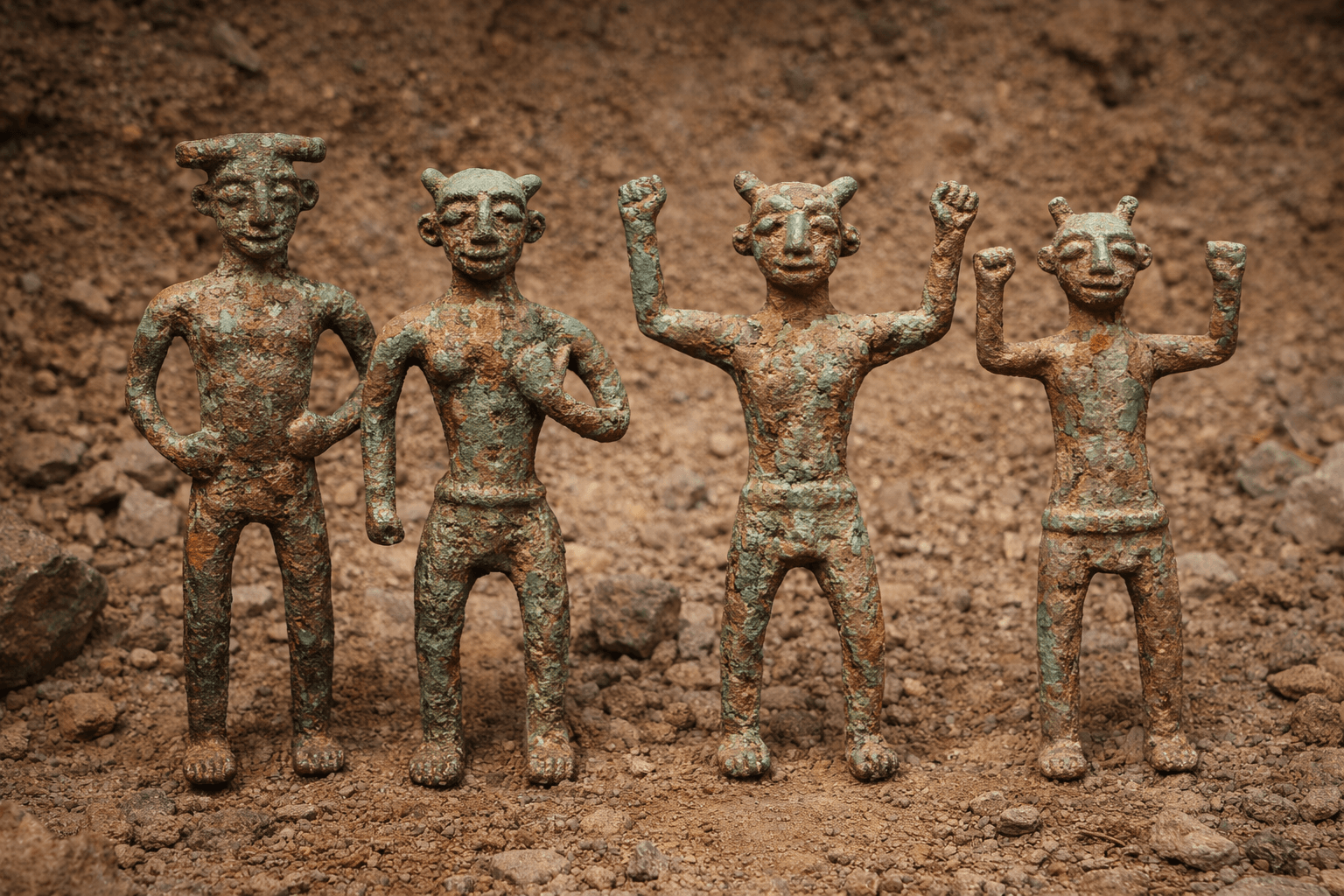
At Bankot, archaeologists found eight copper human sculptures, indicating early use of metal and artistic skill.
11. Garhwal Region
Multiple sites in the Garhwal region have revealed evidence of Painted Grey Ware, indicating cultural continuity and transition toward later historical periods.
Lifestyle of Prehistoric Humans in Uttarakhand
Prehistoric humans:
- Lived in caves and rock shelters
- Depended on hunting and food gathering
- Used stone and metal tools
- Decorated cave walls with meaningful art
- Gradually learned the use of fire
Their life was deeply connected with nature, forming the foundation of Uttarakhand’s ancient cultural identity.
Conclusion
The prehistoric period of Uttarakhand reflects a long and rich journey of human civilization in the Himalayas. From cave paintings and skeletons to pottery and metal artifacts, every discovery tells a story of survival, creativity, and cultural growth. These ancient roots continue to inspire pride and curiosity, encouraging us to explore Uttarakhand’s history more deeply.
Releted Post:⇔