🎨 Cultural Art of Uttarakhand: A Journey from Ancient Rock Paintings to Living Folk Traditions
Introduction: The Living Soul of Uttarakhand’s Culture
The Cultural Art of Uttarakhand reflects the soul, beliefs, and historical journey of its people. From prehistoric cave paintings to refined Garhwal-style miniatures and vibrant folk art, Uttarakhand’s artistic traditions have evolved through ancient, medieval, and modern periods.
Culture is not created overnight. It develops gradually as a distinct way of life, shaped by beliefs, customs, festivals, rituals, and artistic expression. That is why the art of Uttarakhand stands apart—it carries stories of devotion, nature, daily life, and spiritual depth.
This article presents everything a reader searches for about Uttarakhand art, in one place—clearly structured and easy to understand.
Meaning of Culture in Art
Culture refers to the distinct lifestyle developed by a human group over time. Each culture carries unique elements such as:
- Art and architecture
- Religious beliefs
- Social customs
- Festivals and celebrations
The art of Uttarakhand is deeply rooted in its mountain environment, spiritual traditions, and community life, which makes it visually and emotionally powerful.
🎨 Painting Tradition of Uttarakhand
🪨 Ancient Period: Rock Paintings of Uttarakhand
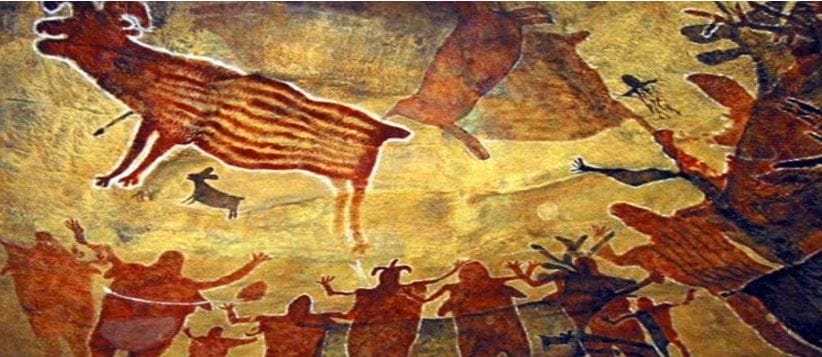
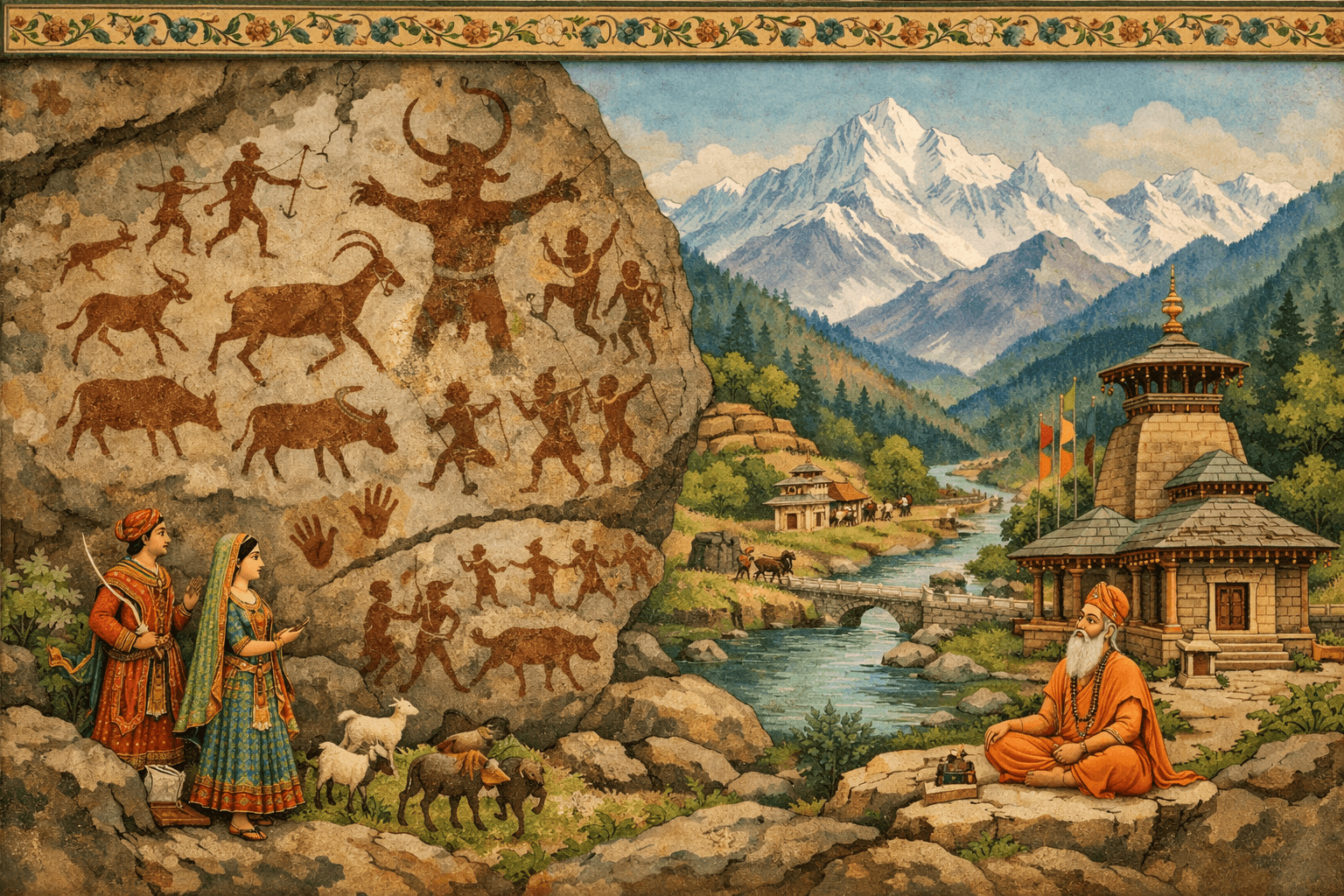
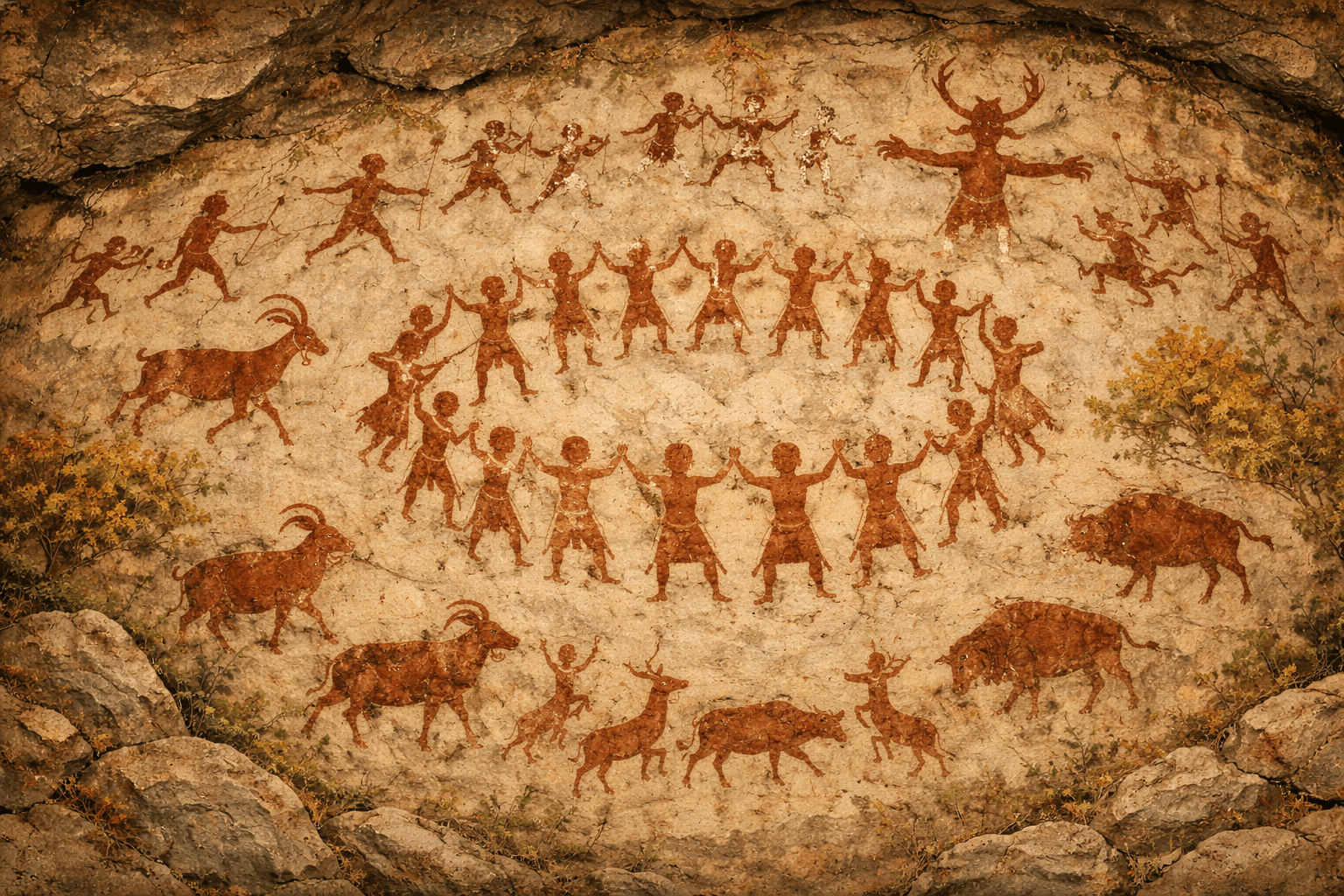
The oldest form of art in Uttarakhand is found in the form of rock paintings inside caves, dating back to prehistoric times.
Major Rock Painting Sites
- Lakhu Cave (Almora):
Depicts humans dancing alone or in groups, along with animals. The paintings are colorful and expressive. - Gwarakhya Cave (Chamoli):
Features vivid animal figures, more detailed than Lakhu cave paintings. - Kimni Village (Chamoli):
Displays white-painted images of weapons and animals. - Lwethap (Almora):
Shows scenes of hunting and people dancing hand in hand. - Hudli Cave (Uttarkashi):
Notable for the use of blue color, which is rare in rock paintings.
These paintings were not just decorative; they were symbols of survival, ritual, and community expression.
🖌️ Middle & Modern Period: Garhwal School of Painting
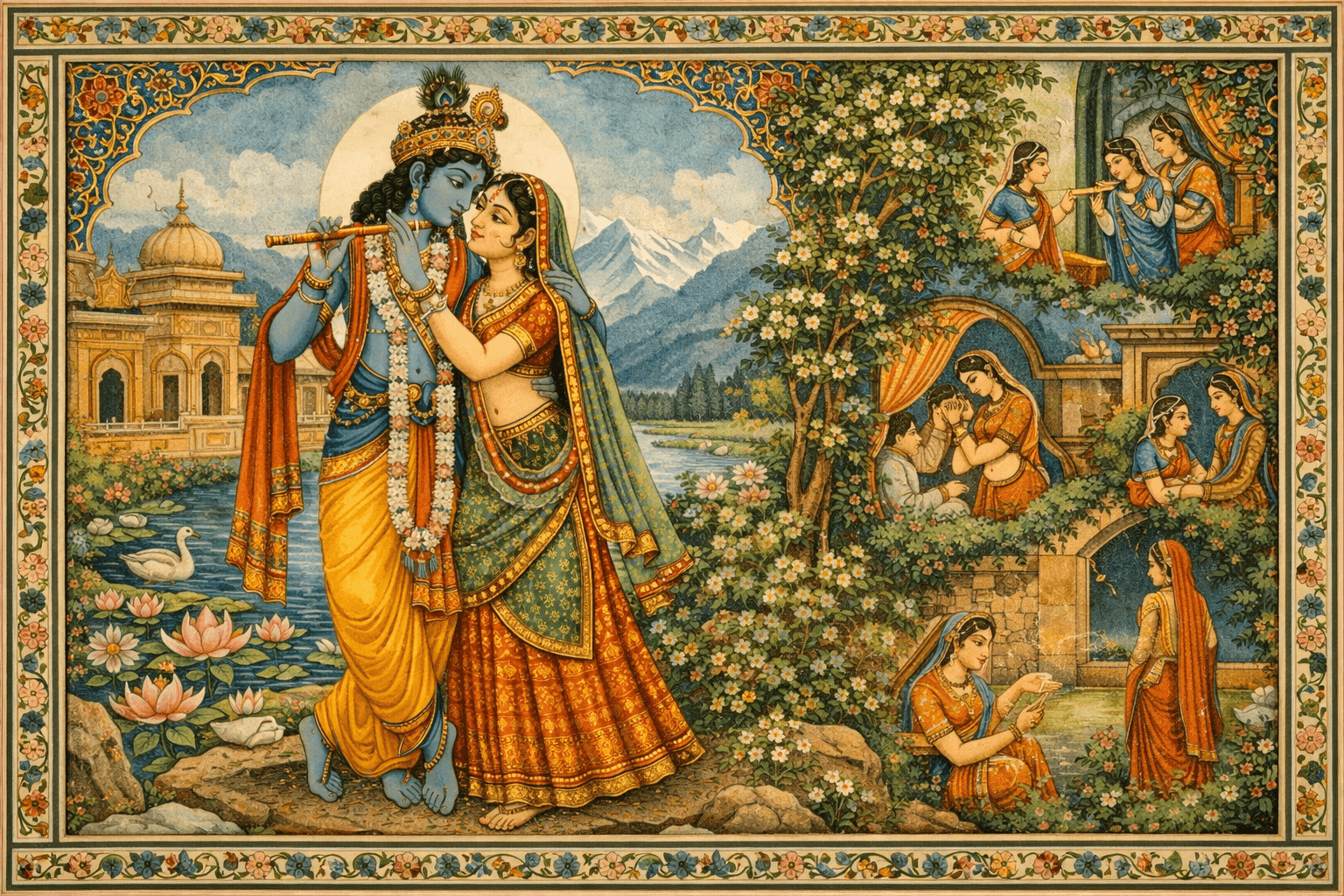
From the 16th to the 19th century, the Garhwal School of Painting flourished in Uttarakhand. This style is a branch of the Pahari miniature painting tradition, developed under royal patronage.
Historical Development
In 1658 AD, Mughal prince Suleiman Shikoh arrived in Garhwal during the reign of King Prithvipati Shah, bringing court painters Tuvar Shyamdas and his son Hardas. Their descendants became the backbone of Garhwal painting.
🎨 Molaram Tomar: The Master Artist
The greatest name in Garhwal painting is Molaram Tomar (1743–1833 AD).
- Son of Hiralal
- Patronized by Pradeep Shah, Lalit Shah, Jai Kirtishah, and Pradyuman Shah
- Combined painting with poetry, often signing his artworks
- Trained Kunwar Pritam Shah in Srinagar
After his death, the style slowly declined, though artists like Jwalaram, Shivram, Ajram, Atmaram, and Tejram carried it forward.
Themes of Garhwal Painting
- Rukmini–Mangal
- Nayika Bheda
- Ramayana & Mahabharata
- Dashavatar
- Ashtadurga
- Navagraha
- Kamasutra
According to Barrister Mukandi Lal, no other Pahari style portrayed feminine beauty as gracefully as Garhwal art.
Museums Preserving Garhwal Art
Despite massive destruction in the 1803 earthquake, Garhwal paintings are preserved in:
- Molaram Art Gallery, Srinagar (Pauri)
- Rao Virendra Shah Museum, Dehradun
- Garhwal University Museum, Srinagar
- National Museum, Delhi
- Bharat Kala Bhavan, Varanasi
- Museums in London, Paris, Cambridge, and Boston
🎨 Folk Paintings of Uttarakhand (Lok Chitra)
Folk art continues to live in homes, rituals, and festivals.
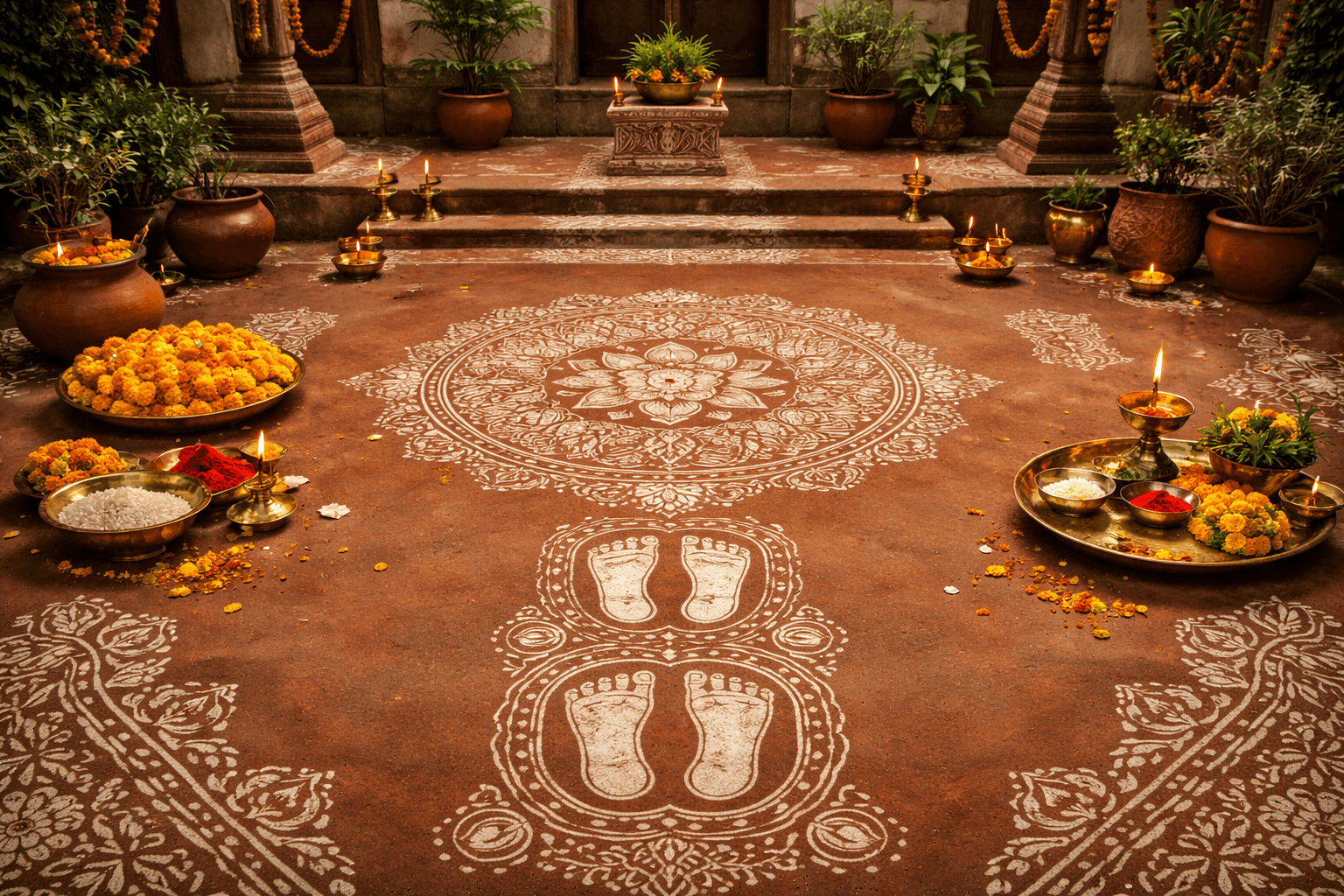
🌸 Aipan (Cheepan)
Made using rice flour and red clay on courtyards during auspicious occasions.
Common symbols: Swastik, Sun, Moon, lotus, conch, snake.
🪔 Jyunti Matrika Chitra
Colorful depictions of gods and goddesses made during:
- Janmashtami
- Navratri
- Dussehra
- Diwali
🎨 Scattering Painting
Drawings made using fingers, brushes, or natural colors on paper, doors, or walls.
🪙 Lakshmi Pau Chitra
Five symbolic footsteps of Goddess Lakshmi drawn from the entrance to the prayer area during Diwali.
Other Folk Motifs
- Seli on Aarti plates
- Khodia symbols for protection
- Tattoo art and wall symbols
Why You Should Explore More Uttarakhand Art
The cultural art of Uttarakhand is not just history—it is living heritage. Each painting, symbol, and design connects us to nature, devotion, and identity.
👉 Explore more articles on:
✨ If you love discovering authentic Indian culture, keep exploring our website for rare history, art, and traditions of Uttarakhand—presented with accuracy, beauty, and depth.